.jpg)
Reception: Police Visit
Our Reception class loved their visit from the Police Community Support Officers today called Annie and Reece. They learnt about their jobs, who to call in an emergency and the different police vehicles. The children also listened to the police siren, saw the flashing lights and were all able to sit in the police car.
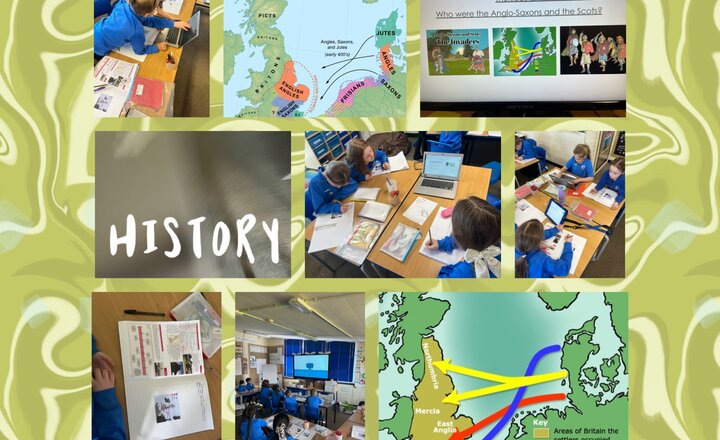
Year 4 History - Who were the Angles, Jutes and Saxons?
This half term we will be looking at how easy it was to invade Britain. Today we focused on the next period of history following on from Roman Britain which was the Anglo Saxon invasion. In groups we researched who the Angles, Jutes and Saxons were and which countries they came from. The children worked really hard to develop their understanding of the routes that each of the groups took and which parts of Britain they invaded first.
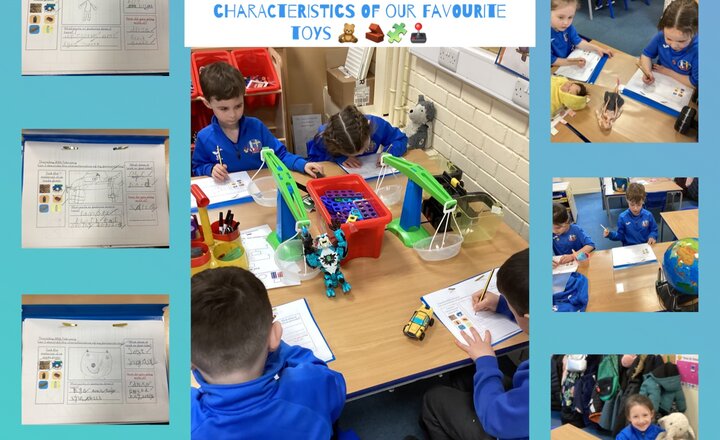
Year 1 History- Exploring the Characteristics of Our Favourite Toys
This afternoon, Year 1 started their new history unit, ‘How have toys changed?’ To start off their learning, they brought their favourite toys into school to show their friends. They thought about what materials their toy is made from, how it feels and looks, how it is played with and what features it has. We had a super variety of toys. Most of the toys we described as being made from plastic or fur, being played with by dressing them up, brushing their hair, cuddling them, driving them, building with them, play fighting or role playing with them and as having features such as buttons, wheels, eyes, legs, arms, mouths and tails. We are looking forward to comparing these modern day toys with toys from the past.
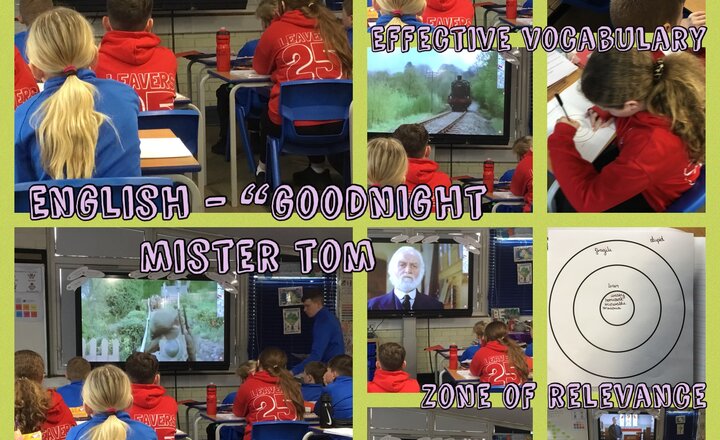
Year 6 English - “Goodnight Mister Tom”
Year 6 have begun their new English topic this week, based on “Goodnight Mister Tom”. The children watched the beginning of the film adaptation as a “hook” into their learning, which they really enjoyed. They then looked at vocabulary linked to the book and the topic, which they then placed onto a Zone of Relevance. This was all then linked to their grammar work on expanded noun phrases and how they make writing more effective for the reader. The children are also going to be linking their English work with their History unit on WWII. In a few weeks they will be visiting the Imperial War Museum in London too to learn more.
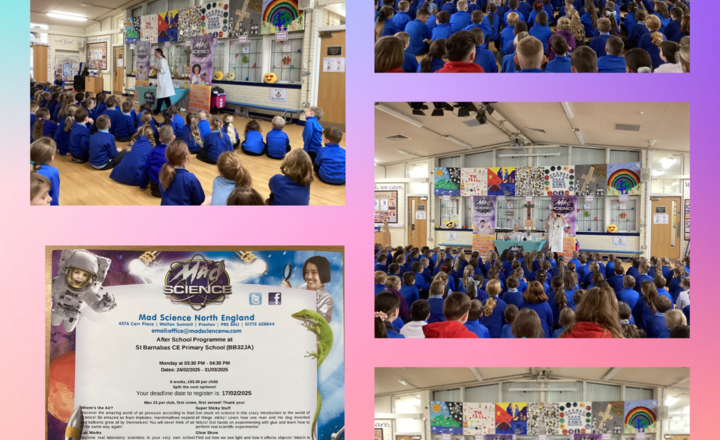
Mad Science Assembly- Whole School
Today, the children were treated to a spectacular science show by Scientific Sarah from Mad Science. Sarah, a trained professional in handling chemicals and fire, emphasized safety throughout the engaging and interactive presentation. Throughout the show, children were encouraged to make predictions about what might happen next, fostering their scientific thinking skills. The children couldn't stop laughing, and there were so many "wow" moments throughout the presentation. The show featured three exciting experiments. First, the children were highly amused by "Egg Bert," a boiled egg that initially resisted entering a glass cylinder. After removing the shell (humorously referred to as his "clothing"), Sarah demonstrated how air pressure, a principle discovered by Jacques Charles, could be used to force the egg into the cylinder. Heating the air inside allowed the egg to slip in, and then, following Charles' suggestion, Sarah introduced cold air to pop the egg back out, to the children's great interest. The second experiment showcased red cabbage juice, a versatile pH indicator discovered by Robert Boyle in 1664. With the help of James, one of the school's science ambassadors, Sarah peeled and blended the cabbage. She explained how adding acid or alkaline substances to the juice would dramatically change its color, creating another captivating visual demonstration. Cassidy also assisted with this experiment. Finally, Sarah performed a "fire hands" experiment. Referencing Doctor Walter Snell's work on storing gas in tanks, she again stressed the importance of safety. Sarah then created three fire bubbles on her hand, a truly mesmerizing finale. Flyers are going home today with details about a new Mad Science After School Club starting next half term, on Monday, February 24th. Importantly, the topics covered in this club are different from those offered last year, so even if your child has participated before, they are guaranteed to learn something new! Registration letters, also going home today, contain full course details and information on how parents can register their children online. The deadline for registration is Friday, February 17th. Interested parents can register online on a first-come, first-served basis at https://northengland.madscience.org. The entire show was a memorable and educational experience for the children, and we're excited to offer this after-school opportunity.
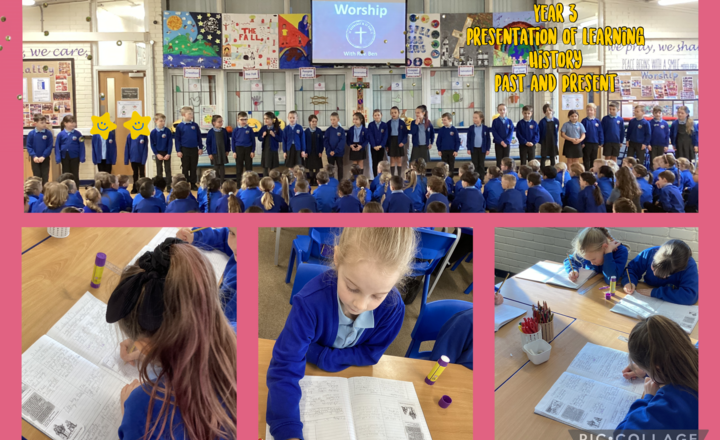
Year 3- Presentation of Learning- History- Past and Present
Over the past three weeks, Year 3 have been learning about how children's lives have changed over time, comparing the past and present. Today, we shared our findings with the whole school in History and Guided Reading. We discovered that childhood and adulthood were defined differently in various historical periods—Roman children were considered adults at 12 or 14, Tudor children started working as young as 7 or 8 and became adults at 15, while in Victorian times, adulthood was reached at 21. Today, the legal age of adulthood is 18. We also explored how daily life has evolved, from clothing differences in Roman and Tudor times to changes in communication, transport, and technology. In the 1930s, toys were homemade from wood, and before Sat Navs, people relied on paper maps to plan their journeys. Seatbelts and airbags were only introduced in 1959, and television was only available in black and white until the 1970s. In the 1990s, Sat Navs were invented, and home computers connected to the internet using phone lines. The children have been great historians, asking thoughtful questions and making insightful connections, and they are thoroughly enjoying this unit as they continue to explore how the past has shaped the world they live in today.
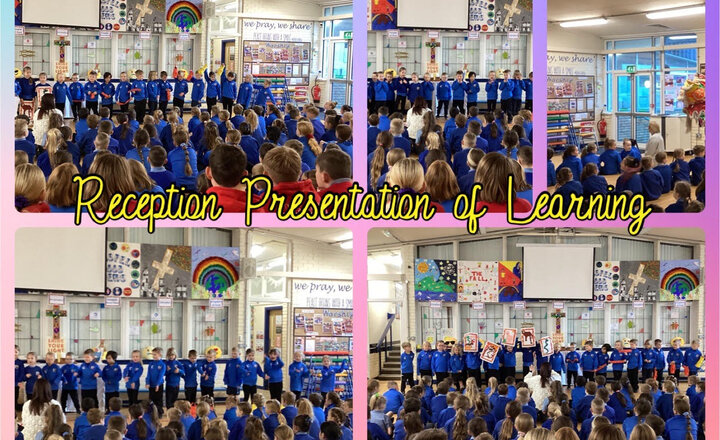
Reception: Presentation of Learning all about Chinese New Year
This week, Reception class have learnt all about Chinese New Year. Today, they presented their knowledge to the whole school. They shared what they had made and a little bit about Chinese New Year. We learnt that this year is the year of the snake. The children made some wonderful lanterns, wrote Chinese numbers and also painted the animals from the great race. Some of the children even took part in a dragon parade. Thank you for sharing your knowledge with the rest of the school Reception, we learnt lots!
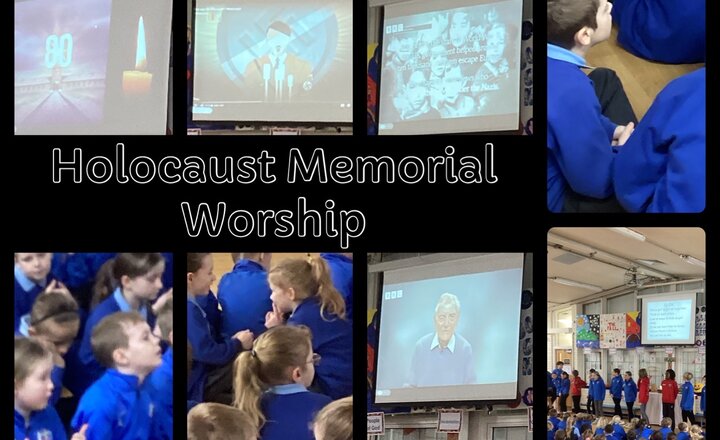
Holocaust Memorial Day Worship
Our first collective worship of the week had a serious and somber tone as we held in our thoughts and prayers all of the Jews who suffered in the Holocaust. We looked out of our spirituality windows to learn how the Nazis did not show love to their Jewish neighbours like God commanded but instead treated them really badly during World War II. We watched a BBC interview with a Jewish survivor, who described some of the personal tragedies he faced at the young age of 6 when his family sent him away to save his life from the Nazi regime. He shared how he travelled on the Kindertransport and a British family showed him love and compassion and became the light in the dark. Through our spirituality mirrors we were able to reflect on how hearing of these events made us feel, and how the Jews must have felt back then. Finally, through our spirituality doors we learned of the many survivors who have worked tirelessly to make people aware of the devastation that was caused so that it would never happen again. We reflected on how we should always love our neighbours regardless of whether they look like you, pray like you, speak like you or think like you and stand up to anyone who is being mean to others.
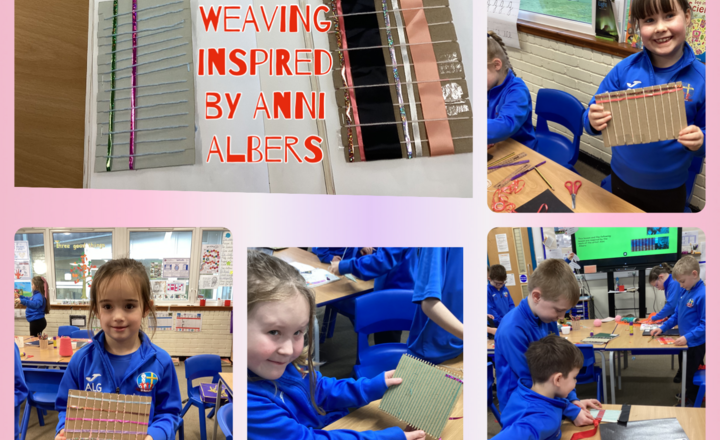
Year 3- Art- Weaving inspired by Anni Albers
This afternoon in Art, Year 3 explored weaving techniques inspired by artist Anni Albers. Using thick card as their base, the children created woven pieces with wool and ribbon. To deepen their understanding, the children watched short video clips demonstrating various weaving methods and their historical significance: 'Carpet Weaving' 'Hand Weaving' 'Palm Weaving' These clips highlighted the long tradition of weaving, which has been practiced for thousands of years, using a wide range of materials, from natural threads to modern synthetic fibers. Before starting their projects, the children referred to the mood boards. They carefully selected a colour that matched the themes or emotions reflected in their boards. When weaving, they alternated the wool and ribbon strips in an under-over-under-over pattern, ensuring each piece was pushed tightly into the weave. They continued this process, repeating the pattern, until all the strips were integrated into their designs. They were thrilled with the outcome and in awe with they created.
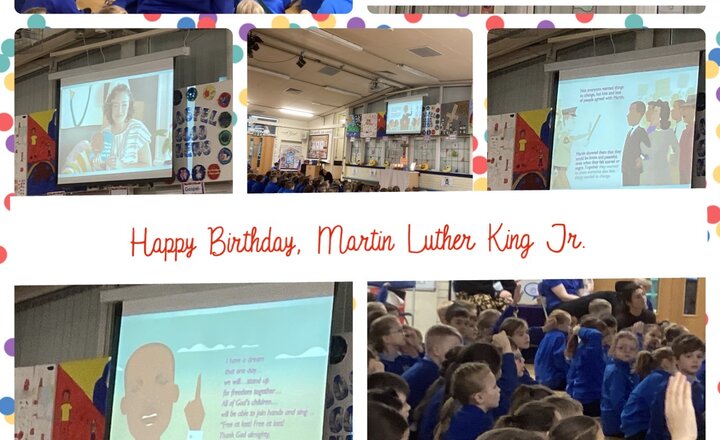
Whole School Worship - Who Is My Neighbour?
In our collective worship, we were considering the question, “Who is my neighbour?” We discussed what it means to love your neighbour as yourself (as mentioned in parts of the Bible such as Leviticus and the Gospel according to Mark) and that there are times when it can be incredibly difficult. In hearing about the life of Martin Luther King Jr, as today is Martin Luther King Jr Day, we discovered that, even when it feels impossible to love our neighbour, when we are mistreated, ignored or disrespected as he and other black people have been, we must try harder to follow God’s greatest commandment, just like Martin did. Our children considered this and spent some time reflecting on the Christian Values that Martin demonstrated and the ways that they would like to make the world a better place and make a difference. Some of the children’s examples included: protecting nature, making peace when we have disagreements, putting a stop to pollution and eradicating poverty. We finished with prayers thanking God for Martin Luther King Jr and all that he did to the make the world a better place and asked Him to give us the courage to stand up for what is right. Rev Ben finished with a special blessing and we sang 'I can make a difference'.
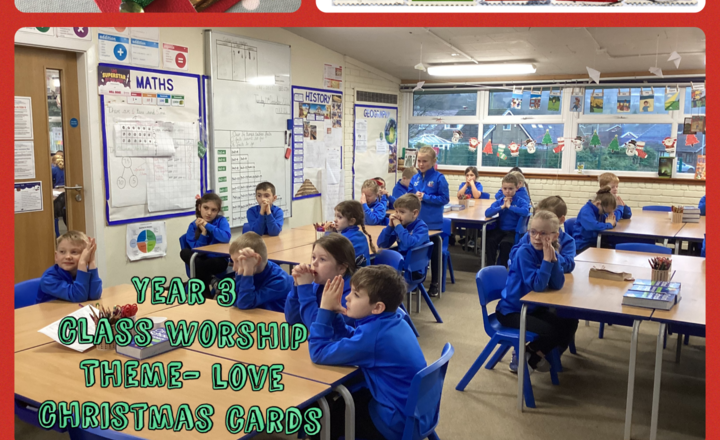
Year 3- Class Worship- Love- Christmas Cards
In today’s worship, Year 3 enjoyed learning about the history of Christmas cards, from when the first postcard was made to how they’ve changed over the years. We talked about how things like rising postage costs have led to more people sending digital or hand-delivered cards. The children shared their own family Christmas traditions and thought about the real meaning of the season, focusing on the story of Jesus’ birth. Lyla ended the worship by reading a prayer, thanking God for all the joy and excitement that Christmas brings.
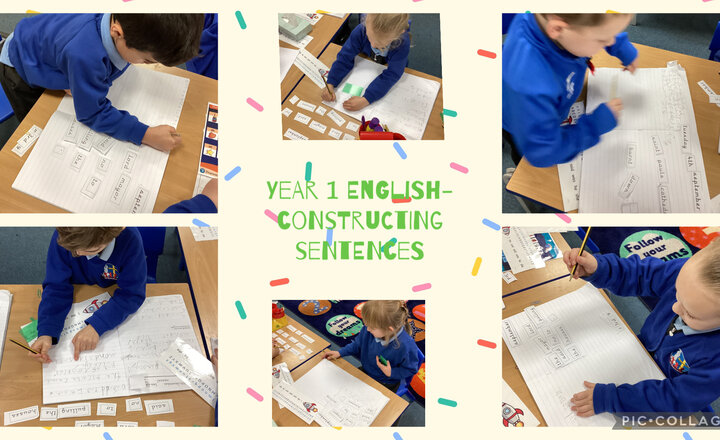
Year 1 English- Constructing Sentences
This week in Year 1, the children have been constructing sentences to retell the events of the Great Fire of London. They have been many groups of words that they have had to form into sentences. To do this, they needed to think about starting the sentence with the subject (who?) and learnt that this could be the name of a person, place or a thing and follow this on with what the person, place or thing is doing (doing what?) to create effective sentences. For example, Thomas Farriner left a spark in the oven and Saint Paul's Cathedral burnt down. Once they had put the words into the correct order, they had to write these sentences into their books ensuring that they used capital letters for the proper nouns.
.png)