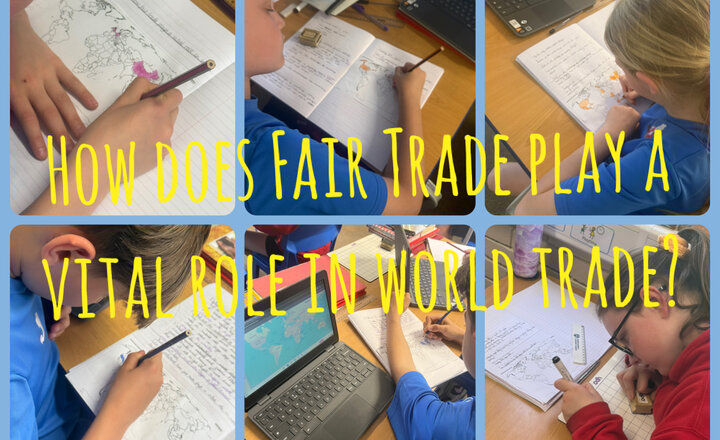
Year 6 - Fair Trade
Today during our geography lesson, Year 6 explored the importance of fair trade and the vital role it plays within global trade. We began with an oracy-based diagnostic question, which enabled the children to make meaningful links to prior learning, particularly around import and export. This discussion helped to surface their existing understanding and misconceptions. Following this, the children developed their geographical knowledge by creating a heatmap of the world. The children identified and coloured countries that participate in purchasing fair trade products, allowing them to visualise global patterns and consider which regions are more actively involved in supporting fair trade practices. To deepen their understanding, we also discussed why fair trade is important, including how it supports producers in developing countries, promotes ethical trading practices and contributes to more sustainable livelihoods. The children engaged thoughtfully with these ideas and demonstrated an increasing awareness of their role as global citizens.
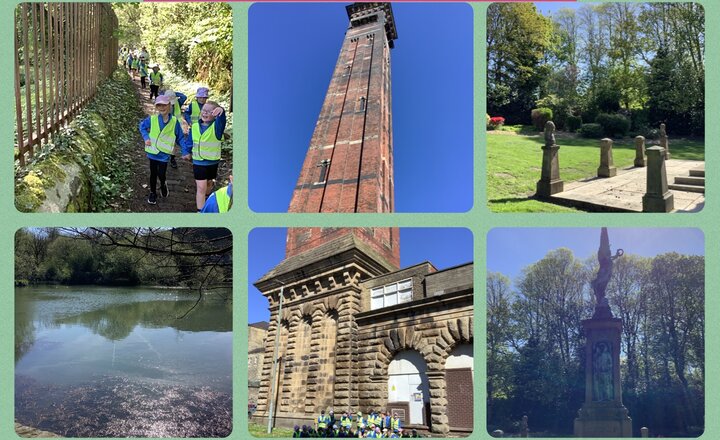
Year 1 Geography: Exploring Darwen
As part of our Geography unit, Year 1 explored our local area in Darwen. We visited many places such as India Mill, Darwen Town Hall, Darwen Heritage Centre, Darwen Leisure Centre and Bold Venture Park. It was a long 8km walk and the children enjoyed seeing different areas in their town.
.jpeg)
Year 1 Geography: Darwen Heritage Centre
Year 1 enjoyed exploring Darwen Heritage Centre. The volunteers gave us lots of information about Darwen Tower, Whitehall Park, Sunnyhurst Woods and Bold Venture Park. One volunteer was even a student at St Barnabas when he was younger! The children were shocked to hear that at one time, Darwen did not have any schools. When schools were created, children only came to school for five years then went to work. We loved seeing the models of Darwen Tower and India Mill.
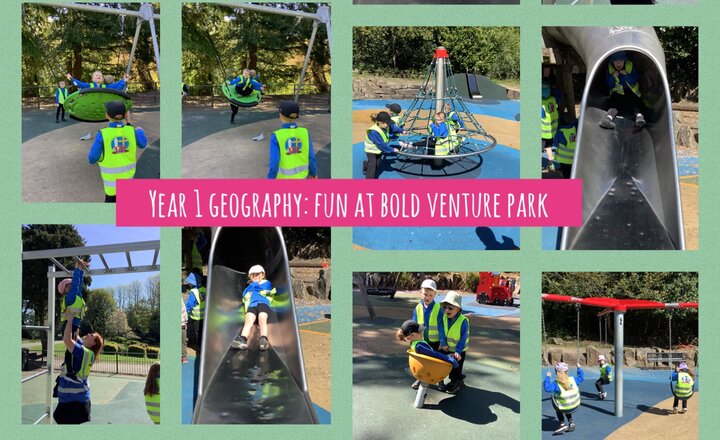
Year 1 Geography: Fun at Bold Venture Park
To celebrate the end of our long 8km walk, we had lots of fun playing at Bold Venture Park. The children took turns kindly and helped each other on the swings. We could also spot the lion statues that we had seen previously in Darwen Heritage Centre.
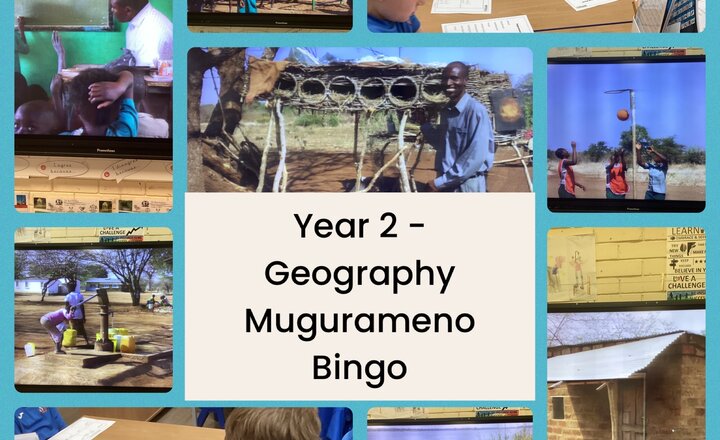
Year 2 - Geography - Mugurameno Village
Year 2 have been learning about Mugurameno Village in Zambia. We wrote questions about what life is like in the village.
Year 6 - Earth Day
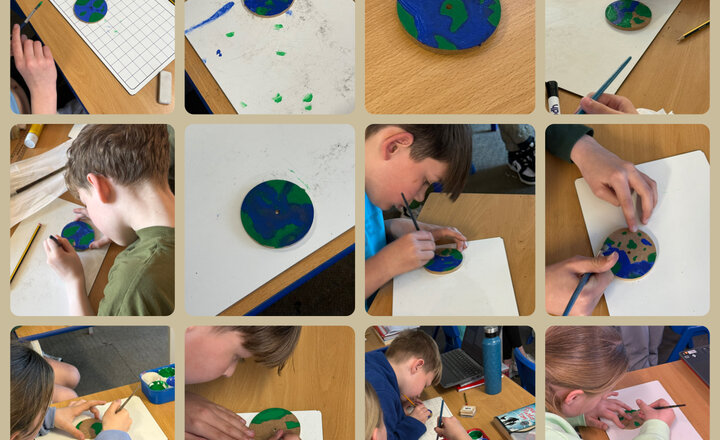
To celebrate Earth Day, Year 6 children explored the importance of sustainability by taking part in a creative upcycling project. The children transformed old wooden wheels into beautifully designed Earth themed coasters. The children carefully painted each piece to represent our planet, reflecting on the need to protect natural resources and reduce waste. This hands on activity not only developed their artistic skills but also encouraged thoughtful discussions about how small actions can make a big difference to the environment.
Whole School Worship- Earth Day 2026: Our Power, Our Planet
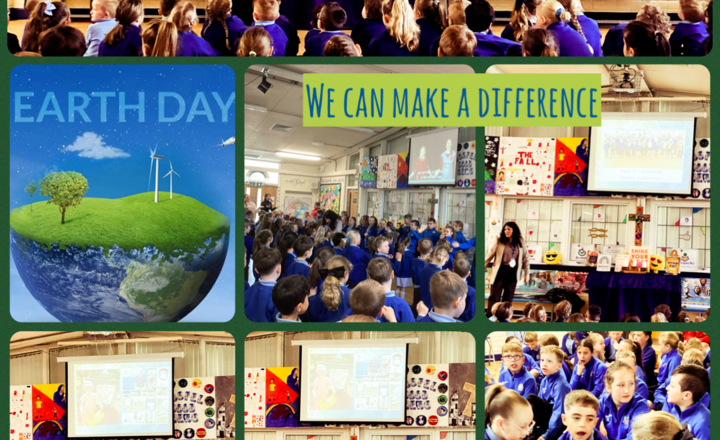
Today, Mrs Ham led an inspiring whole-school worship focused on Earth Day 2026, which is tomorrow, and our theme, 'Our Power, Our Planet. We explored essential ways to care for our environment, from the importance of recycling and saving water to the impact of planting trees. During the session, the children demonstrated fantastic oral speaking and oracy skills as they discussed their personal pledges with their peers, articulating how they plan to help the environment, not just on Earth Day, but every day! We heard some wonderful stories: Luna spoke about her time picking up litter on holiday in Greece, while Alfie shared that it is an act of kindness to pick up rubbish even if it isn't your own. Jonas also reminded our budding Planet Protectors to wear green for the land and blue for the sea tomorrow to celebrate Earth Day. From planting trees at home to helping grandparents with local litter picks, the children’s ideas were truly inspiring. We also reflected on our efforts as a school family in protecting our planet over the last few months such as planting a microforest at Jacks Key, planting two orchards on our school grounds, our WOW group's pick up dog poo campaign, our Rotakids recycling teddies and winter coats for those in need and focusing on switching off lights and devices. We concluded by singing, 'We Can Make a Difference', and offering a prayer of thanks for our wonderful world, reflecting on how we can all work together to protect our precious planet.
Year 1 Geography: Exploring Our School Area
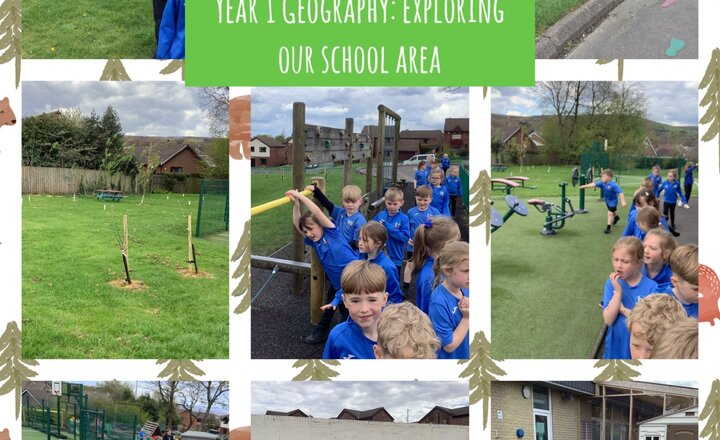
In Geography, we recalled what human and physical features are. Human features are things made by humans such as playgrounds. Physical features are natural environments such as wooded areas. We walked around our school ground to find human and physical features. We had lots of human features such as the trim trail, playgrounds, the peace garden, the outdoor gym and the Muga. We had some physical features like the football fields and our growing school orchard.
Year 5 - English
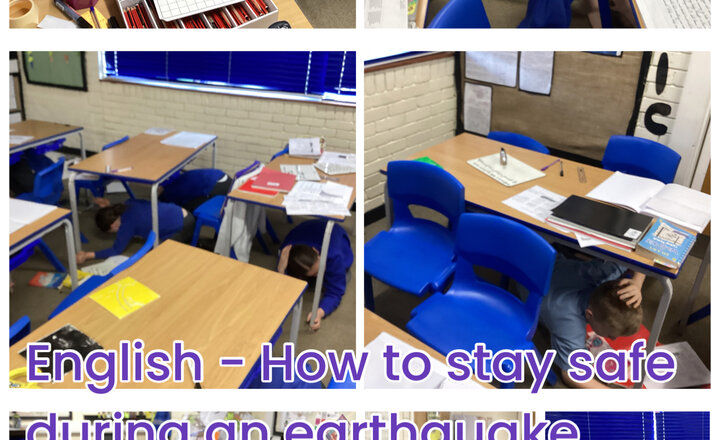
Our topic in English concerns writing an explanation text about earthquakes. To understand how school children in Los Angeles prepare for a potential earthquake, we studied the practice of Drop Hold Cover. This involves children dropping to the floor holding the back of their heads, crawling beneath a table and holding still until the danger passes. The children were given the task of surviving an artificial earthquake that struck Year 5 today. Thankfully, they all made it through unscathed.
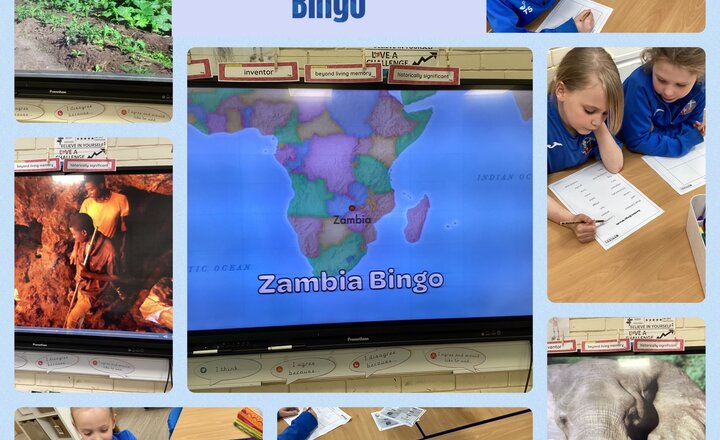
Year 2 - Features of Zambia
In Year 2 we have been learning about some of the physical and human features of Zambia.
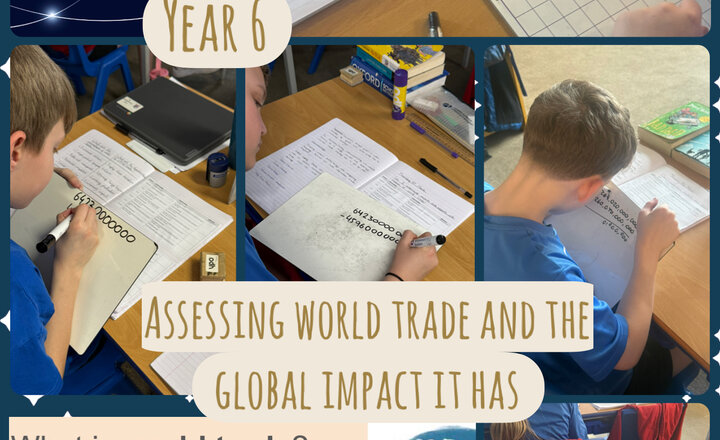
Year 6 - World Trade
This week in Geography, Year 6 explored the import and export balances of countries around the world. The children developed their understanding of how goods and services move between nations and how this trade impacts a country’s economy. The children learned about the concept of trade balance, discussing the differences between imports and exports and what it means for a country to have a surplus or a deficit. The children also explored how debt can have a significant impact on a country’s development and how increased income through trade can lead to improvements in infrastructure, education and quality of life. Through discussion and enquiry, the children considered how global trade links countries together and how economic decisions can affect people’s everyday lives.
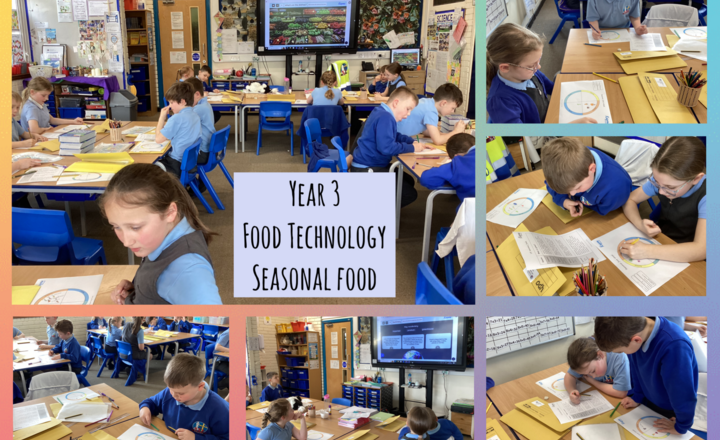
Year 3- Food Technology- Exploring Seasonal Food
This afternoon, we explored the world of seasonal eating and discovered where our food actually comes from. We learned that while supermarkets provide us with a huge variety of ingredients year-round, importing food from overseas can lead to a larger carbon footprint and increased waste. By choosing to eat food that is in season in the UK, like summer strawberries or autumn pumpkins, we can support our local farmers and help protect the environment. Using our UK seasonal food wheels, we identified which crops flourish in our temperate climate. This knowledge will be essential over the next few weeks as we begin to design and bake our very own seasonal tarts.
.png)