.jpeg)
Year 5 - Friction
Today, Year 5 explored the effects of friction in a hands-on science lesson! Using whiteboards and a variety of materials. The children measured the amount of push needed to make a toy car move over different surfaces. The children made predictions, recorded their findings, and discussed how friction impacts movement in real life. It was a fantastic lesson full of curiosity, investigation, and teamwork!
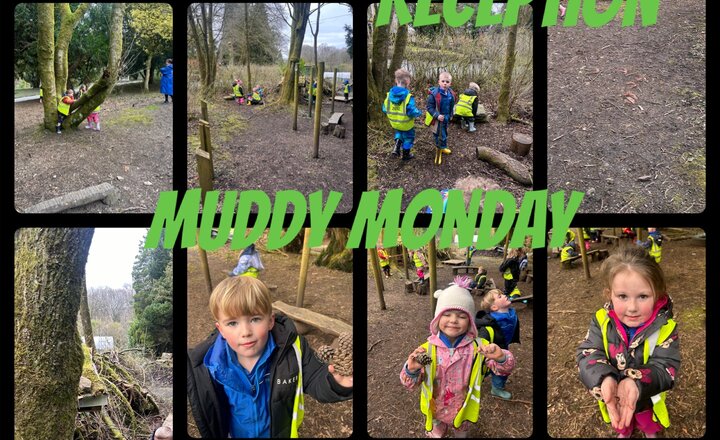
Reception: Muddy Monday
The children in Reception walked 3.5km each this week to contribute further to our Big Lent Walk in aid of CAFOD. They walked to Whitehall Park and continued with their outdoor learning. This week the children found pine cones, climbed trees and found minibeasts. They also enjoyed creating dens and roleplaying around a camp fire!
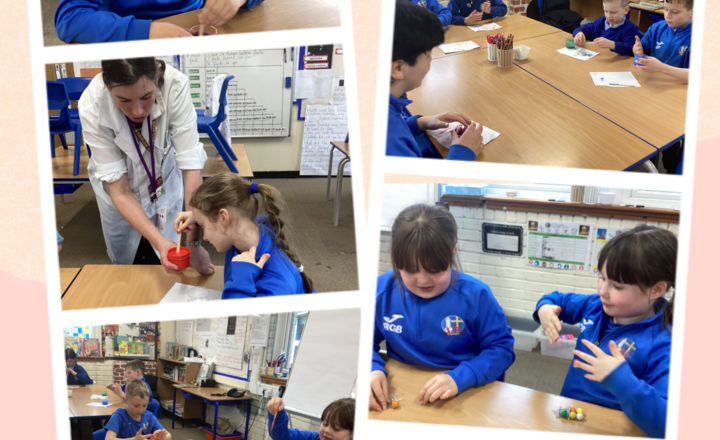
Mad Science After School Club- Slime Time-The Science Behind the Goo!
Today, our young scientists had an exciting, hands-on adventure in the world of Mad Science Slime! The children explored the science of polymers while creating their own colourful, stretchy, and squishy slime. Each child chose their favourite colour, mixing and experimenting like real chemists to bring their slimy creations to life. The children put their slime to the test in our Mad Science Slime Olympics, stretching, bouncing, and squishing their creations to see whose slime was the stretchiest, stickiest, and most creative.
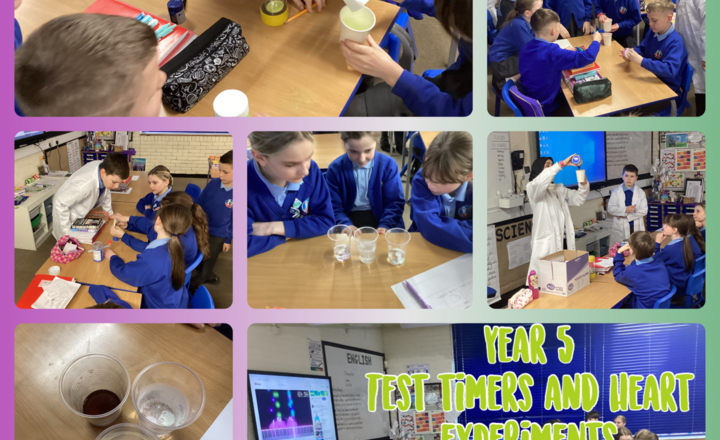
British Science Week- Year 5- Building Sand Timers and Sweet Reactions
This afternoon, Year 5 had a brilliant time getting hands-on with science, exploring time and sweet reactions. First, the children took on the challenge of building their own sand timers. They worked in teams to create timers measuring one, two, and five minutes and then tested them to see how accurate they were. Our Science Ambassador, Mathew, was on hand to support them, and it was fantastic to see the children applying their scientific knowledge and working together. Then, we moved onto a heart shaped sweet experiment. The children investigated what happens when heart-shaped sweets are placed in different liquids: water, vinegar, and a fizzy drink. Before they started, everyone made predictions about what they thought would happen. They then carefully observed the changes, noting how the sweets reacted in each liquid. This led to some lively discussions about dissolving, chemical reactions, and the properties of liquids. It was a fantastic day of scientific exploration, where the children learned about time and chemical reactions whilst enjoying the teamwork and excitement of discovery. We certainly lived life in its fullness, celebrating British Science Week with engaging and educational activities.
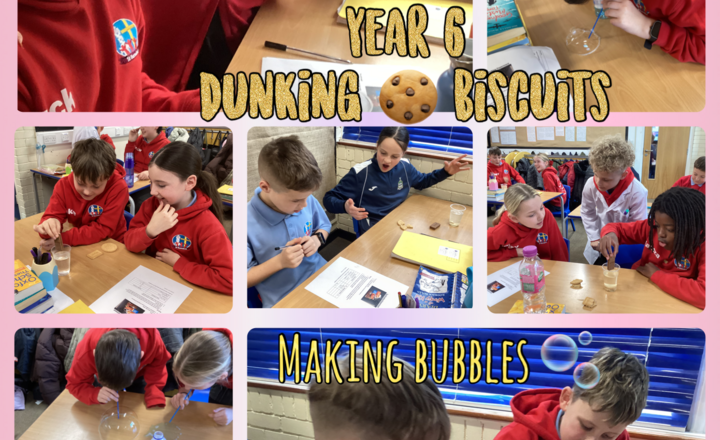
British Science Week- Year 6- The Great Biscuit Dunk: Exploring Material Properties and Absorbency
This afternoon, our future scientists carried out the "Dunking Biscuit" experiment to celebrate 'British Science Week'. They made predictions about which biscuit would crumble first when dunked in room temperature water, ensuring it was a fair test by changing only one variable the type of biscuit. With the support of our Science Ambassador, Noah, the children carefully observed the results and concluded that certain biscuits, such as the [digestive], crumbled first due to their texture and composition. The science behind this experiment involves understanding the properties of materials, such as porosity and absorbency, which affect how the biscuits react when exposed to liquid. The children enjoyed discussing their findings, reinforcing their understanding of material properties, and of course, sampling the biscuits afterward! It was a fun and engaging way to apply scientific inquiry, develop critical thinking skills, and explore how materials behave in different conditions.
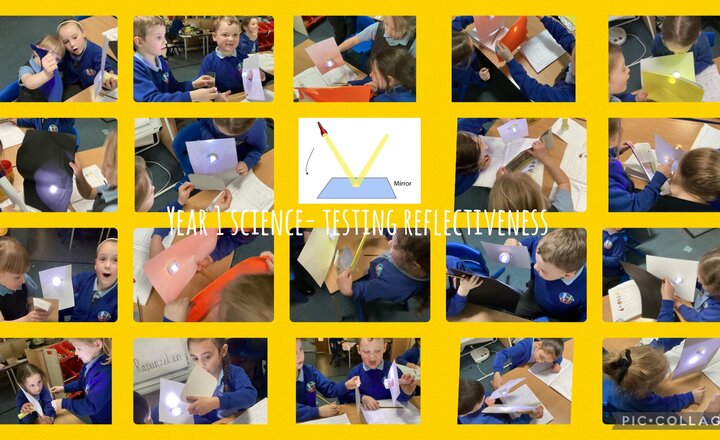
Year 1 Science- Testing the Reflectiveness of Materials
Today in their science lesson, Year 1 were testing the reflectiveness of materials. They tested a variety of materials (tin foil, black paper, dark fabric, bright fabric, mirrored plastic, newspaper, shiny paper, and brightly coloured paper) to see whether the light bounced back and reflected onto the white paper. They noticed that mirrored plastic and paper was extremely reflective and brightly coloured paper and fabric was also very reflective and even turned the white paper a different colour. We also found out that dark fabric and paper was not reflective. These colours absorbed the light. Great science Year 1- well done!
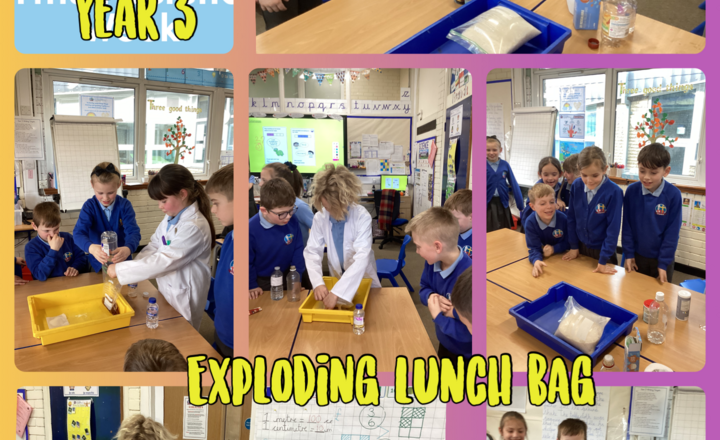
British Science Week-Year 3 Celebrates British Science Week with a Bang!
This afternoon, Year 3 had a full afternoon of science, celebrating British Science Week in style and truly living life in all its fullness! They took part in exciting hands-on experiments, exploring chemical reactions, gases, and surface tension. The highlight of the session was the Exploding Lunch Bag experiment! The children were amazed as they watched a sealed bag suddenly pop. By combining baking soda and vinegar, they observed how a chemical reaction produced gas, causing the bag to expand until it burst. They made predictions, discussed their observations, and thought scientifically about why the reaction occurred. Next, they investigated the fascinating science of surface tension by creating bubbles on the table and even bubbles inside bubbles. Using soapy water and straws, the young scientists discovered how a thin layer of soap traps air, forming bubbles that stretch and hold their shape. To conclude their exciting afternoon of science, Year 3 explored diffusion with the Skittles Experiment. Throughout the session, our Science Ambassadors Noah, Mathew, and Cassidy were fantastic role models, demonstrating techniques and encouraging their peers to think like real scientists.
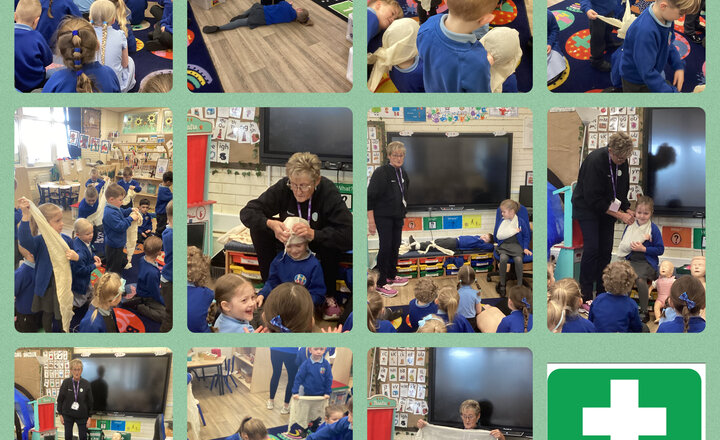
Reception: First Aider Visit
We had the pleasure of welcoming Marion into our class today. Marion has trained all of our staff to be first aiders and the children were also taught some basic first aid. They were taught why first aiders wear gloves, when to apply a plaster, how to put a bandage on and how to put somebody into the recovery position. Thank you so much for teaching us Marion, we learnt lots.
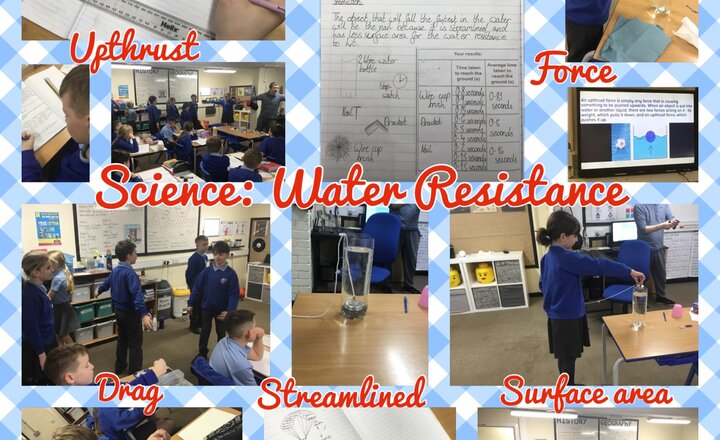
Year 5 Science - Water Resistance
Year 5 had a fantastic science lesson on forces and water resistance, this week. The children learned that objects need to be streamlined in order to move through water easily, otherwise the upthrust or drag will slow them down. They made predictions about which object they thought would move fastest/slowest through water and then carried out an investigation to test their predictions.
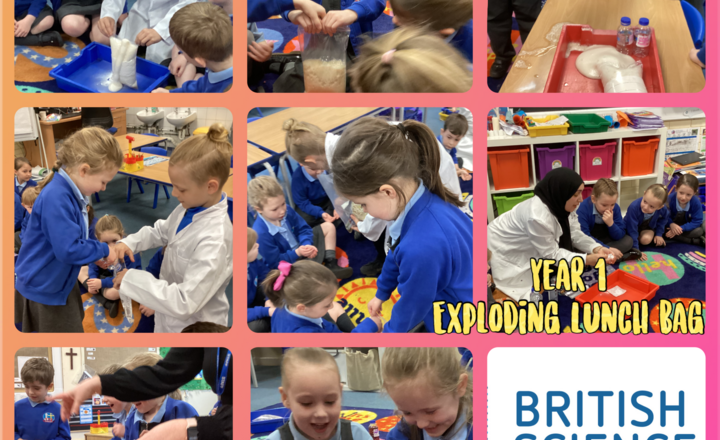
British Science Week- Year 1- Exploring Chemical Reactions
This morning in Year 1, we carried out an exciting experiment called Exploding Lunch Bag! The children were amazed as they watched a sealed bag suddenly pop. Using baking soda and vinegar, they observed how a chemical reaction created gas, causing the bag to expand until it burst. They discussed what was happening at each stage, making predictions and thinking scientifically about why the reaction occurred. Our Science Ambassador, Noah, was a fantastic helping hand during the experiment. Then we planted mung seeds in a sealed bag with moist cotton wool, the children came up with different suggestions about what might happen next. Some wondered whether the seeds would sprout faster in a warm or cool place and questioned if adding more water would speed up the growth. While others were eager to see if theirs would grow faster than Reception’s.
.png)
British Science Week- Year 4-Volcano Cups and Bubble Wonders
This afternoon in Year 4, we created volcanoes in a cup, using a fascinating mixture of baking soda, vinegar, and food colouring. The children decorated their cups with different emojis to express their excitement before watching their mini eruptions bubble over! They observed how the chemical reaction between the acid (vinegar) and the base (baking soda) produced carbon dioxide gas, causing the mixture to fizz and overflow just like a real volcano. We then explored the science of surface tension by making bubbles on the table and even bubbles inside bubbles. Year 4 scientists discovered that bubbles form because a thin layer of soap molecules trap air inside. By carefully blowing into their bubbles with a straw, they learned that the soapy film stretches and holds its shape, allowing them to create bubbles within bubbles. Our Science Ambassador, James, was a fantastic help throughout the session, supporting his peers by demonstrating techniques and encouraging them to think scientifically. The children made predictions, tested different techniques, and used Talk Tactics to share their observations. It was a fantastic hands-on way to explore the science behind reactions, gases, and surface tension.
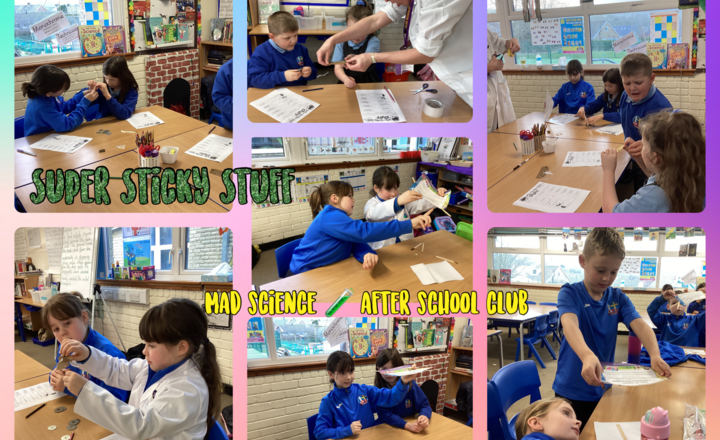
Mad Science After School Club- Super Sticky Stuff
This afternoon in the club, our future scientists got hands-on with exciting experiments, testing different types of tape, lemon, orange, and other sticky substances to explore their properties and strength.