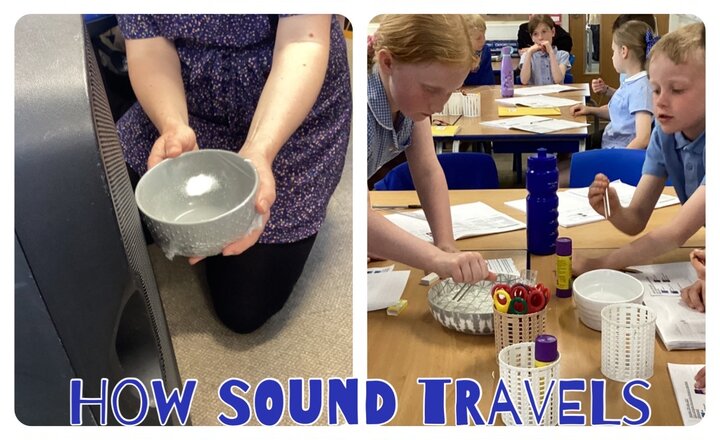
Year 4 - Science: How Sound Travels
Our Year 4 scientists enjoyed exploring changes in sound this week. They investigated differences in sounds when travelling through different mediums. Their investigations included talking through a balloon, listening with a cone, listening to rocks banging under water, sending vibrations through a metal coat hanger straight to the ear, holding tuning forks on water, and observing how sugar granules react next to a speaker. We learned that when sound travelled through solids it seemed more powerful because the particles inside the solids were densely packed together.
.jpeg)
Reception - Minibeast Visit
Today, our Reception class enjoyed an exciting visit from the local Animal Garden pet shop, who brought along a fascinating collection of minibeasts for the children to explore. The children were thrilled to get up close with a range of creepy crawlies and even a tarantula! They had the opportunity to ask questions and observe the creatures carefully. This hands-on experience sparked lots of curiosity and discussion, supporting our current topic on minibeasts and helping to build confidence, language skills and respect for living things.
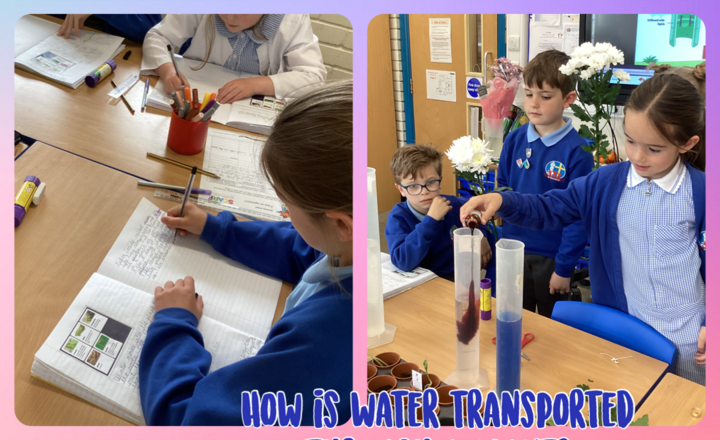
Year 3 - Science- How is water transported through plants?
This afternoon, Year 3 scientists carried out an experiment to see the transportation of water inside plants. We used white flowers and put them in different coloured water, green, red, and blue. We're going to watch carefully to see how the coloured water moves up into the flower's petals through tiny tubes called xylem. This process will help the children understand how the xylem helps with the transportation of water from the bottom all the way to the top.
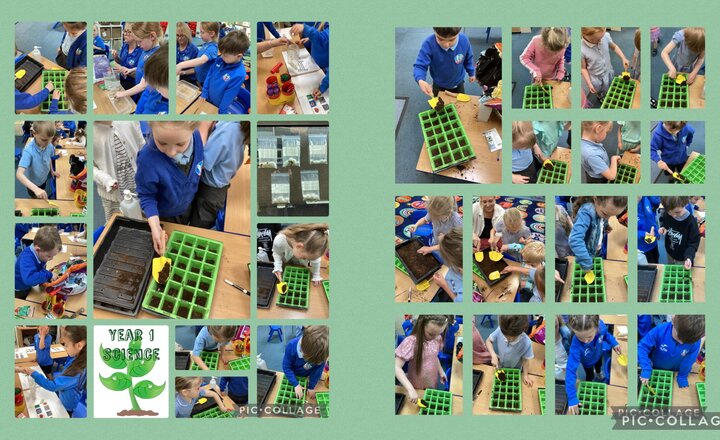
Year 1 Science and PSHE- Plants
In Science, Year 1 are learning about plants. They have planted cress, sunflowers, runner beans and mung beans and are excitedly watching them grow. This has also tied in with their learning in PSHE as they have had to think about taking responsibility for these seeds and ensuring that they are provided with the things that they need for survival and growth.
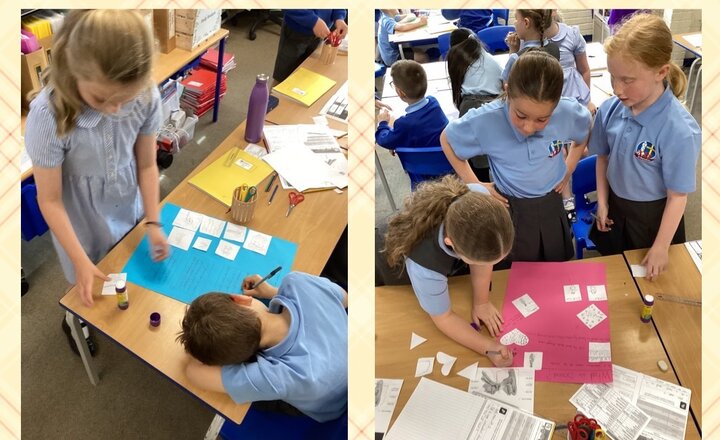
Year 4 - Science: Creating Sound
In Year 4 this week, we began our new science topic, Sound. We learned about 3 main steps to creating sound: the source vibrates, which vibrates the air particles around it to create sound waves, and then these waves are received, for example, by a human ear. The children were put into groups to create presentations about what they had learned.
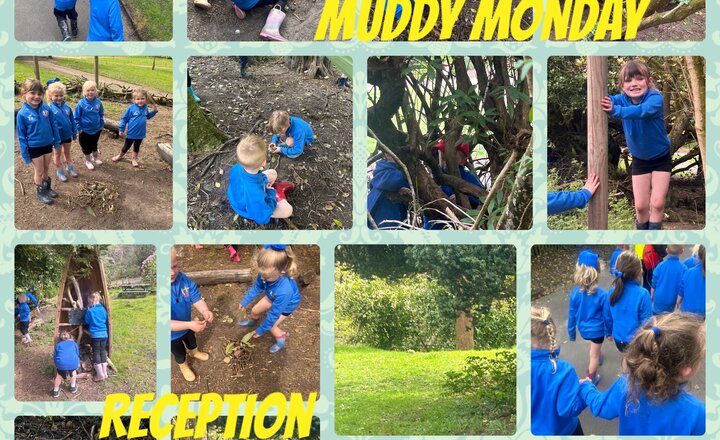
Reception: Muddy Monday
For their Muddy Monday session, Reception walked to Whitehall park and looked for signs of spring. The children saw squirrels and heard lots of birds tweeting away which was lovely to see and hear. They saw more leaves on trees and also saw berries and blossom. The children then got to spend some time in a different section of Whitehall park. We role-played a camp fire and built a den too.
.png)
Year 3- Year 0f Prayer-Seeds of New Beginnings
As part of our Year of Prayer across the Diocese, the children each planted cress seeds to represent new beginnings. They also wrote heartfelt prayers, giving thanks to God for the many signs of new life around us, from newborn lambs and blooming flowers to the start of a new school term and the joy of new friendships.
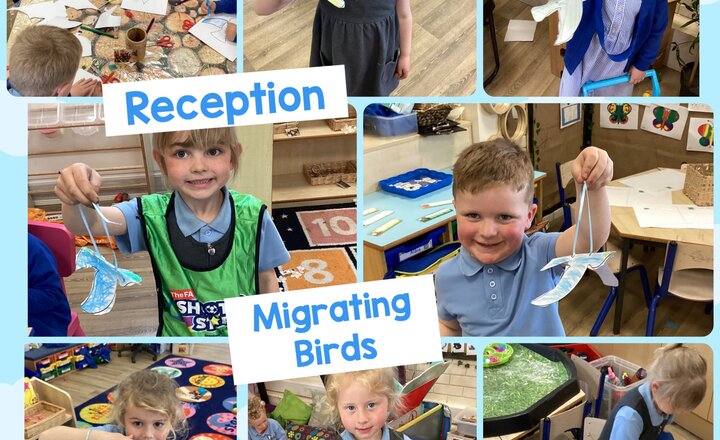
Reception - Bird Migration
As part of our topic on Spring this week, we have been learning about bird migration. We discussed how lots of birds migrate to warmer countries in the Winter, as it’s too cold for them to build nests and find fresh food. However, now that it is Spring and getting much warmer, the birds are returning from their migration and we are happy to welcome them back and see them in our local environment again. Today we created our own migrating birds and tomorrow we will create bird feeders to hang in our Reception yard to welcome the birds back.
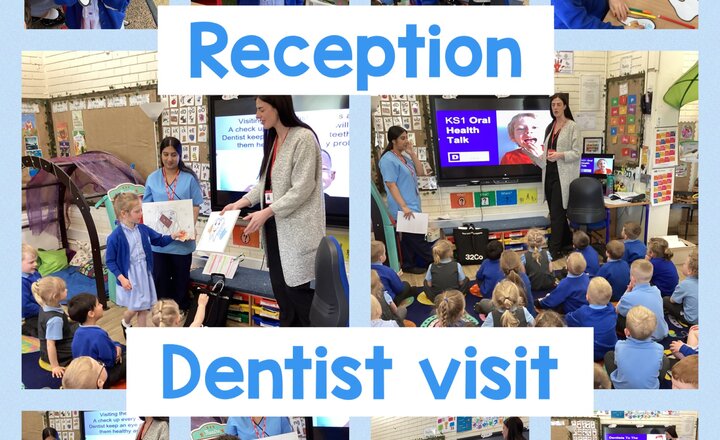
Reception Dentist Visit
Reception had a visit from Darwenside Dental Practice to speak to them about their oral hygiene. They shared with us how we can look after our teeth by reducing the amount of sugary snacks and drinks we have between meals. They also spoke to us about the importance of brushing our teeth twice a day and visiting the dentist regularly for check ups. We are very lucky to have such wonderful Dentists who help us to keep our teeth healthy.
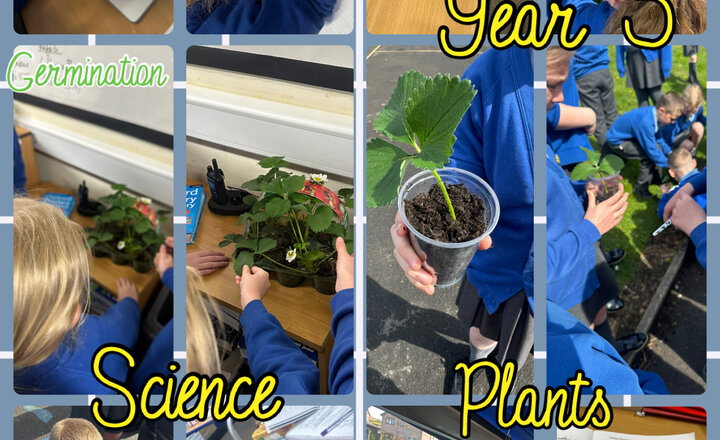
Year 5 - Plants
Today, Year 5 explored how plants grow and reproduce. They learned about the key parts of a plant, including roots, stems, leaves, and flowers and discovered how each part plays an important role in keeping the plant healthy. The class investigated how plants make their own food through photosynthesis and how pollination and seed dispersal help them reproduce. To bring their learning to life, they planted their own cuttings and will observe them closely over the next few weeks to see how they grow and develop roots.
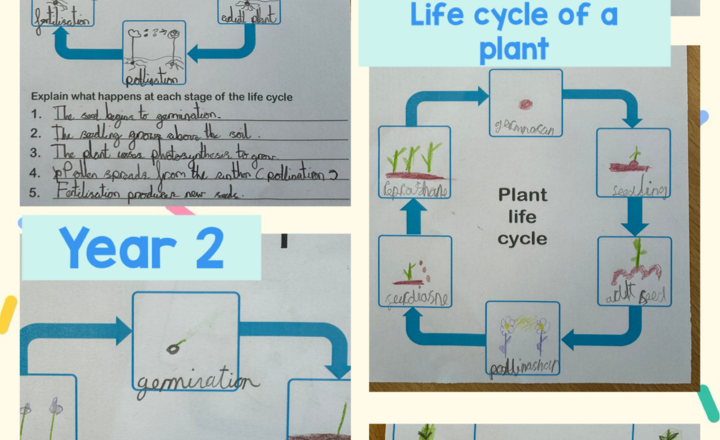
Year 2 - Life cycle of a plant
Today, Year 2 continued their learning all about plants. Today we explored the different stages of a plants life cycle. We used technical vocabulary to describe the plant and what was happening at each stage. The stages we identified are: germination, seedling, adult plant, pollination, fertilisation and reproduction. The children were superb at remembering the stages of the cycle.
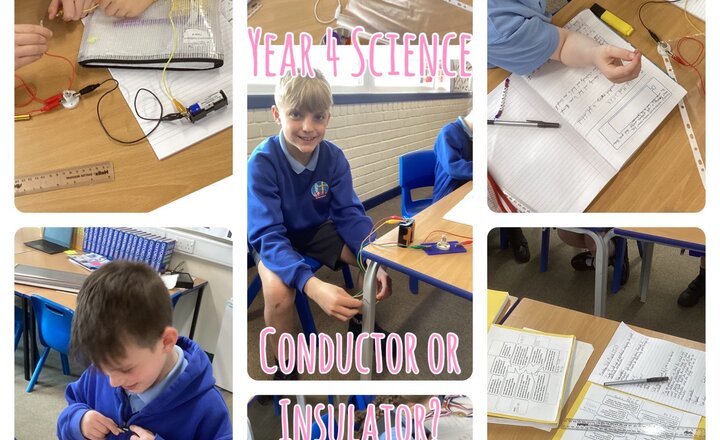
Year 4 - Science: Conductors and Insulators
In Year 4 this week, we were working scientifically by designing practical enquiries in order to test our predictions. We decided on a question to investigate, decided how we would investigate and made predictions. Once we were ready we built a series circuit with a bulb and, in place of a switch, we connected a range of different materials to see if the bulb would still light. We found out that most of the metal objects conducted electricity so the bulb lit. We also discovered that the majority of the items in our pencil cases were insulators so the bulb didn’t light whilst these items were connected.