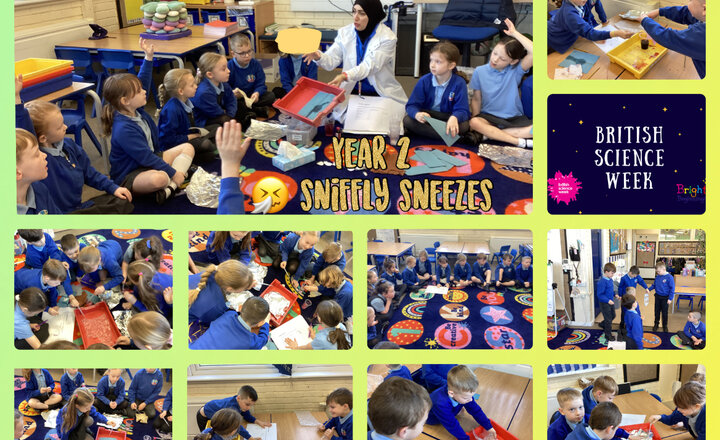
British Science Week- Year 2- Sniffly Sneezes-Thinking about the strength and absorbency of materials.
Today, we explored the strength and absorbency of different materials to determine which would be best for wiping your nose. Using trays and food-coloured water, the children discussed a variety of materials before testing their absorbency. They used pipettes to carefully drop water onto each material, observing how much liquid it could soak up and how strong it remained when wet. The children recorded their findings and compared results, thinking scientifically about what makes a material both absorbent and durable. As an extra challenge, the children planted mung seeds in a sealed bag with moist cotton wool and used talk tactics to predict what might happen next. Some had imaginative ideas, suggesting their seeds might grow as big as Jack’s beanstalk! Others were curious to see if theirs would grow faster than Reception’s. They'll observe any changes over the next few days and see if their predictions come true.
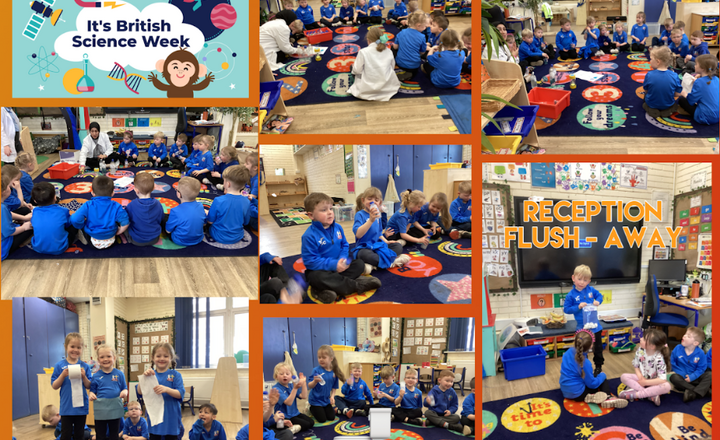
British Science Week- Reception- What can we 'Flush Away'?
We have kicked off Science Week with a blast! Miss Kachwalla, our Science Lead initiated a discussion about what can and cannot be flushed down the toilet, encouraging the children to think critically about the impact of their choices. This activity helped develop observational skills and apply knowledge to real-life situations. The class explored key questions, such as: Have you ever flushed any of these items? What happened to them? Which materials broke down when flushed, and which did not? Why is it important to only flush items that break up easily? To investigate further, the Reception class conducted a practical experiment by shaking a bottle containing tissue, paper towel, and toilet paper for 15 seconds. They then observed how each material responded to water, noting which broke down and which remained intact. This helped them understand why only toilet paper, wee and poo should be flushed, while other materials can cause blockages. Science Ambassadors Cassidy and Naomi were on hand to support the lesson, helping to guide discussions and assist with the experiment. As an extra challenge, the children planted mung seeds in a sealed bag with moist cotton wool and used talk tactics to predict what might happen next. Will they disappear? Change colour? Explode? After just 24 hours, the seeds should start to pop open and sprout. Within 3 days to a week, they’ll be fully sprouted, and after a few more days, tiny leaves will start to emerge. This hands-on activity will allow them to observe germination in action and track the changes over time.
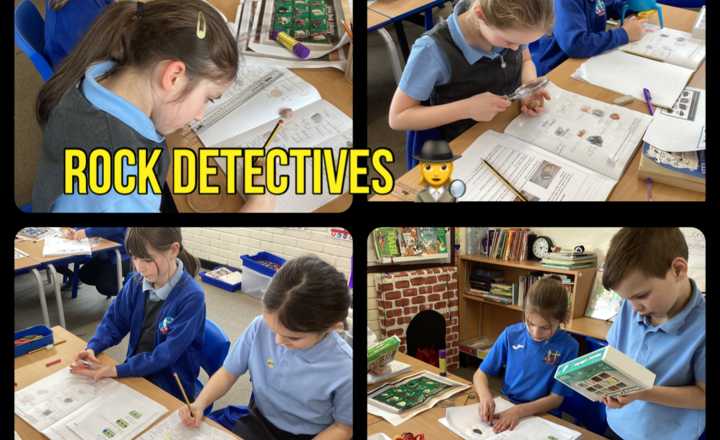
Year 3- Science- Rock Detectives
This afternoon, the Year 3 geologists became rock detectives, investigating and comparing different types of rocks based on their appearance and physical properties. Using magnifying glasses, they took a closer look at the three main rock types.
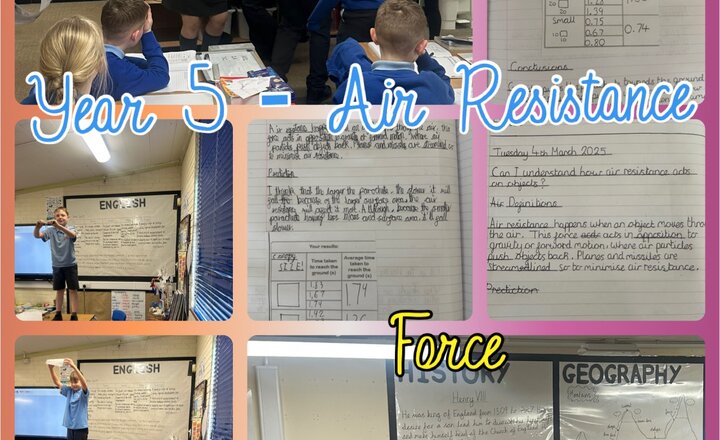
Year 5 - Air Resistance
Today, Year 5 continued their science unit on forces by investigating air resistance through class experiments. As they dropped the parachutes from a height, they carefully timed how long each one took to reach the ground, recording their results for comparison. Through their observations, the children discovered that parachutes with a larger surface area created more air resistance, slowing their descent. They discussed how this principle applies to real-life situations, such as skydiving and the design of parachutes used in space exploration. This practical investigation helped deepen their understanding of how forces interact and how air resistance plays a crucial role in everyday life.
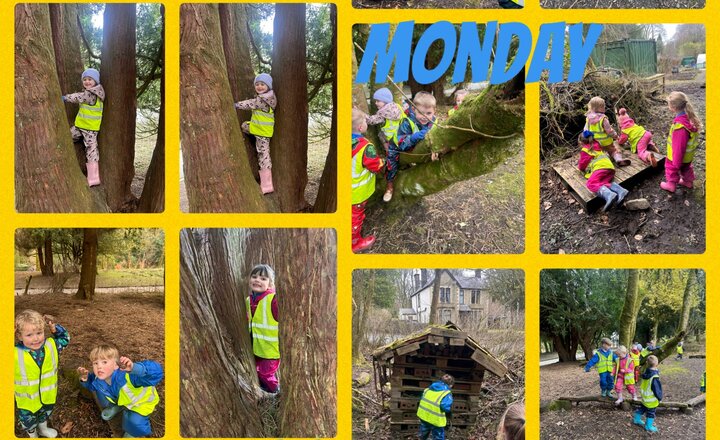
Reception: Muddy Monday
Our Reception class went to Whitehall park for the first time for their Muddy Monday session. They found pine cones, climbed trees, looked for minibeasts and made dens. The children loved exploring the area for their forest schools session and we can't wait to visit again soon.
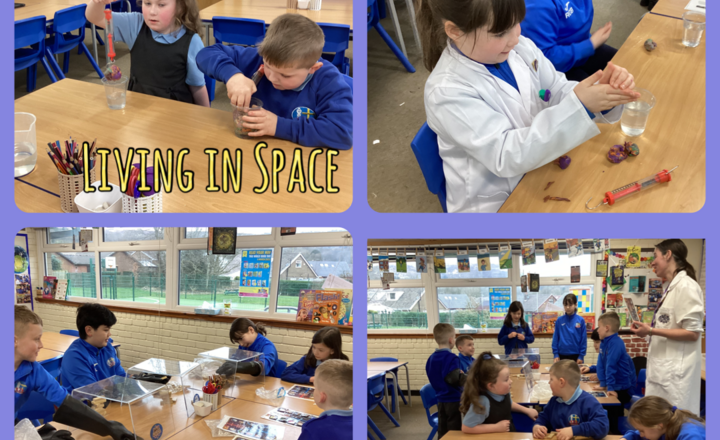
Mad Science After School Club- Living in Space
Today in Mad Science After-school club, the children stepped into astronauts' shoes and uncovered the incredible challenges of living in space. They explored why astronauts train underwater to simulate microgravity and discovered how the absence of gravity affects the human body. From floating in space to maintaining muscle strength, they learned what it takes to survive and thrive beyond Earth.
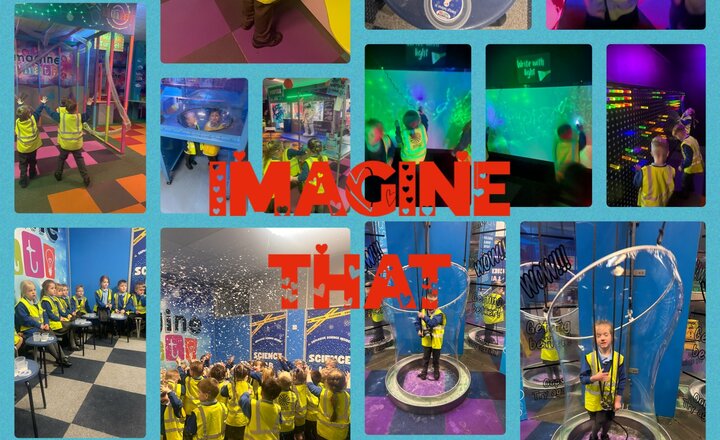
Reception Visit to Imagine That
Our Reception class visited Imagine That today. They had a brilliant time using their imagination in imagination village, creating art making magnets and bags. They also made snow and slime! The children really enjoyed the dry ice experiments and loved the science room where we got to explore and learn. It was a wonderful trip where lots of memories were made. The staff commented on the children's behaviour and how amazing they all were, what superstars! For all images, please look at our gallery: https://stbarnabasdarwen.co.uk/photo-galleries/reception-visit-to-imagine-that
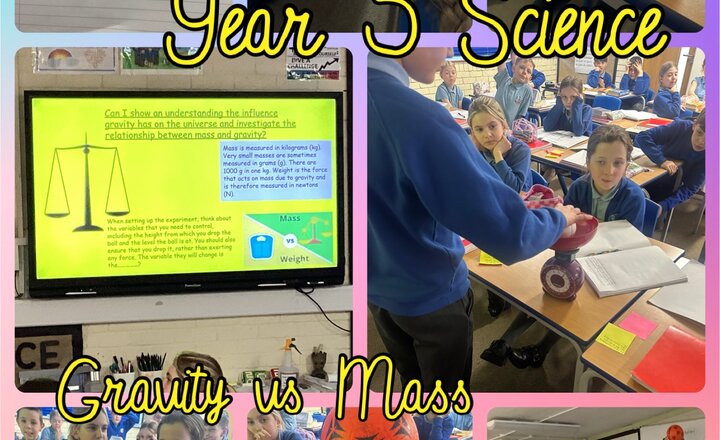
Year 5 - Gravity vs Mass
Today, Year 5 conducted an experiment to explore the relationship between mass and gravity. The children carefully measured and recorded the weights of five different balls before dropping them from the same height. To their surprise, they discovered that gravity is a constant force, meaning that all the balls fell at the same speed, regardless of their weight. We then discussed the role of air resistance and how it affects falling objects. The children were fascinated to learn that if air resistance were removed—such as in a vacuum—a bowling ball and a feather would fall at exactly the same speed. This led to a great discussion about real-life examples, including astronauts on the Moon, where there is no air to slow objects down.
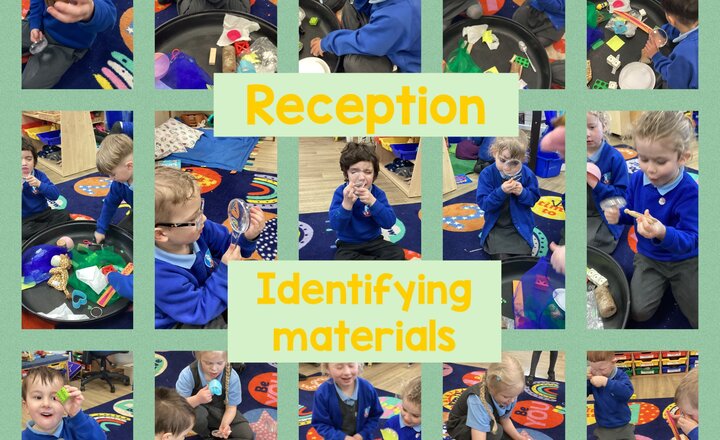
Reception- Identifying materials
In class we have been identifying different materials. We have looked at wood, metal, plastic, paper and fabric. In groups we had a look at the objects in the tuff tray using a magnifying glass, we identified them and said why we thought the object was that material.
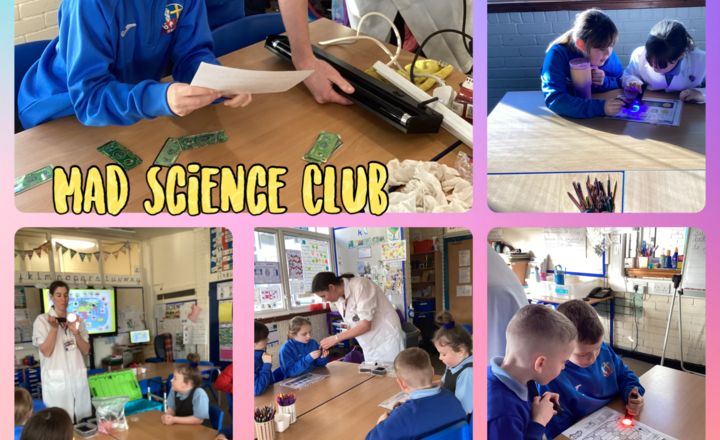
Mad Science After School Club- Glow Show
Today in Mad Science After-School Club, our future scientists explored how we see light and how it interacts with different objects. They were amazed as they observed phosphorescence in action under UV light. They also discovered the fascinating secrets behind how real money is made and the special features used to prevent counterfeiting. The children were fully engaged and are now super keen to find out what exciting topic they will be exploring next week.
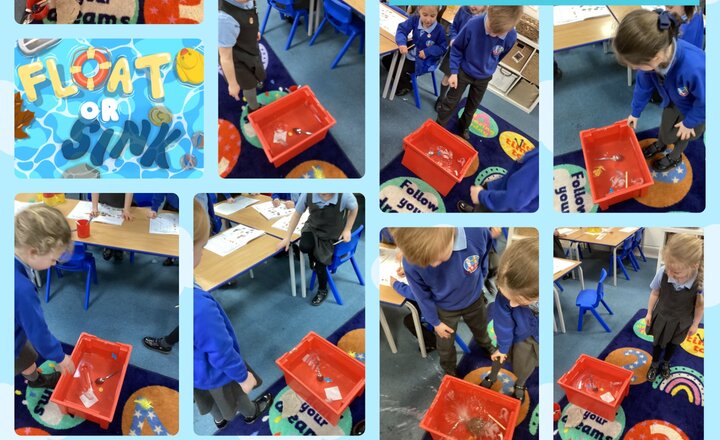
Year 1 Science- Floating and Sinking
Today in Science, Year one learnt about floating and sinking. They learnt that when something is floating, it can be described as buoyant and when something has gone beneath the surface of the water, it can be described as being submerged. Year 1 learnt that generally speaking lighter objects will float and heavier objects will sink. However, they also learnt for an item to float, it must contain trapped air. This was illustrated through the example of a submarine. When the submarine was filled with air, it floated on the water but when this air was replaced with water, the submarine sunk. We saw some examples of this in our own classroom too. When a glass bottle was empty and filled with air, it floated but when this air was replaced with water it sunk. Likewise, we experimented with some cotton wool which presented the same results. Year 1 also predicted and tested many other objects to see whether they would sink or float such as a feather, rock, paper clip, lolly stick and a metal spoon.
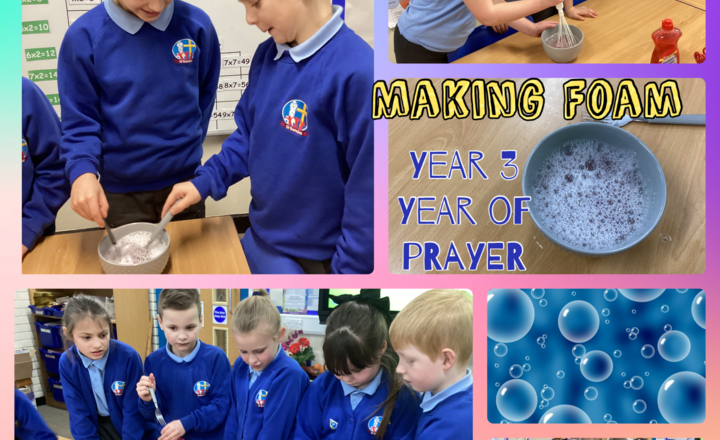
Year 3- Year of Prayer
This week, Year 3 explored the theme of foam as part of our "Year of Prayer." Mixing fairy liquid and hot water, the children experimented with different whisking techniques to create bubbles in the water. This activity provided an opportunity to give thanks to God for the gift of strength that enables us to move and participate in various activities.