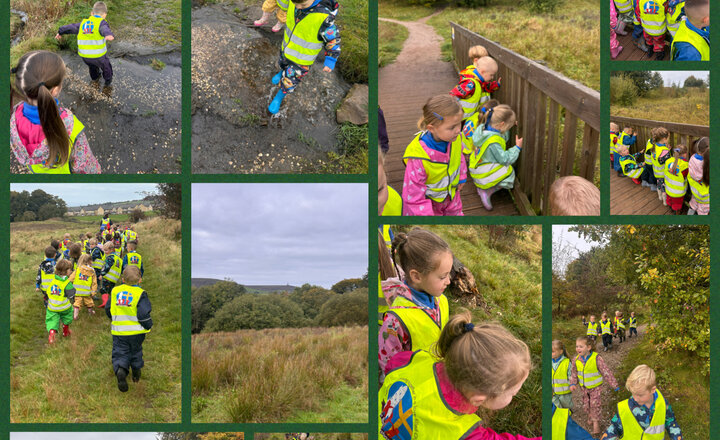
Reception: Muddy Monday
Wow! On Monday the children in Reception blew Mrs Wilkinson's and Mrs Thompson's socks off! They walked over 2km around Jacks Key. The children listened to sounds they could hear, looked at what they could see under a bridge and used their imaginations chanting trip trap and the bear hunt story. The children had lots of fun!
.jpeg)
Year 6 - Science
Today in Science, the children created simple electrical circuits to investigate which materials act as insulators and which act as conductors. They worked carefully to build their circuits and made thoughtful predictions before testing a range of everyday materials. The activity helped them develop their understanding of how electricity flows and why certain materials are used in electrical devices.
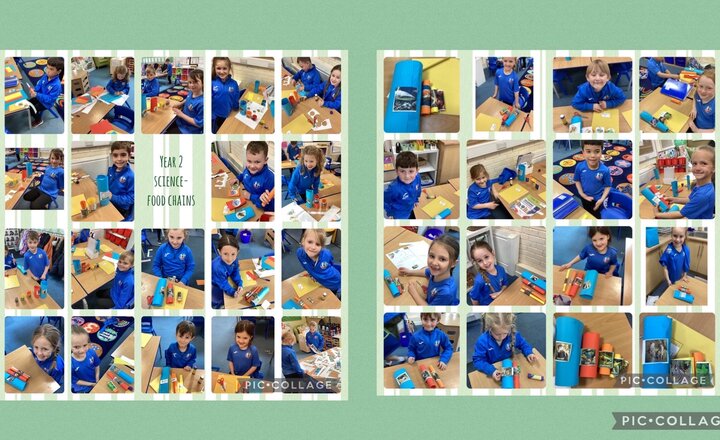
Year 2 Science-Food Chains
This week, Year 2 explored how food chains work in Science. To help understand the concept, we used the idea of a Russian doll, showing how a food chain begins with a producer and is followed by a series of consumers. We built food chains with up to four consumers. Fantastic work, Year 2!
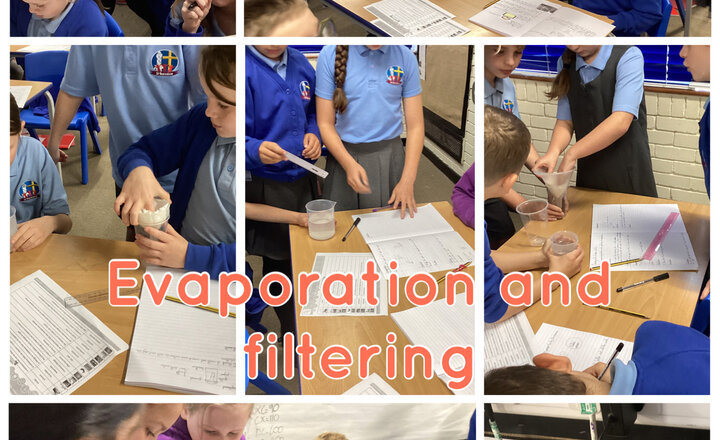
Year 5 - Science
In science, we continued exploring how materials change. This week we looked at mixtures, including what they are made of and how we could separate them. We focussed on trying to retrieve the salt from salt water solution, using filtering and evaporation methods.
.png)
Year 3- Science- Forming shadows
In our science lesson, our young scientists learned some fundamental principles of physics. They discovered that light travels in a straight line, which is why a shadow is formed when an object blocks that path. By moving the light source, they learned how the position of light affects the size and shape of a shadow. They saw firsthand that an object's shadow changes depending on the light's angle and how far away it is. This hands-on exploration taught them that a shadow is simply the absence of light, a concept that forms the basis for everything from understanding eclipses to how our eyes see. We became experts at forming shadows using artificial light sources, like torches. It was great to see everyone working in pairs, acting as our own little research team.
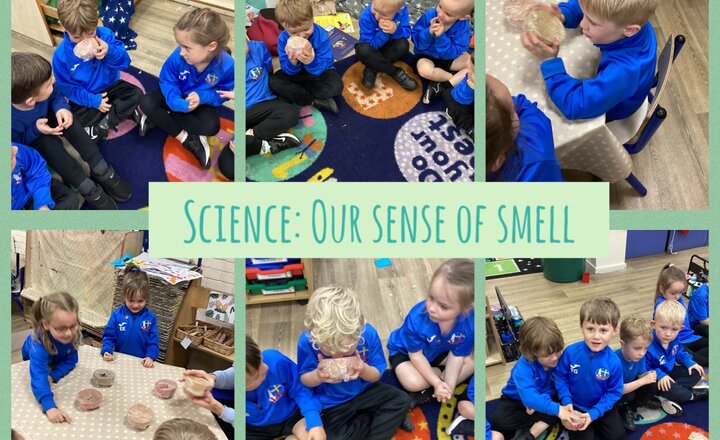
Reception - Our sense of smell
This week, for our understanding of the world, we have been focusing on our noses and our sense of smell. We have talked about the important job our nose has in helping us to identify different things from the food we eat to the fresh scent of flowers. It also helps to keep us safe if we come across a bad smell, we know not to eat it. We discussed what smells nice and what smells horrible, and how sometimes we might feel differently about those smells. We then used our noses to smell a range of different tubs which contained familiar and unfamiliar smells.
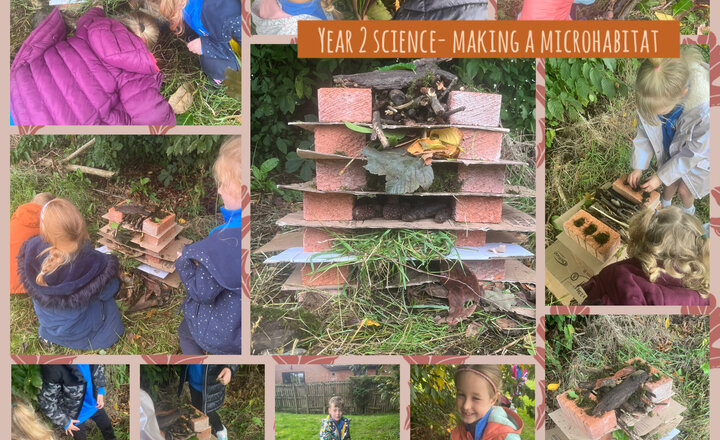
Year 2 Science- Collecting Materials and Building a Microhabitat
Today in Science, Year 2 took a trip to Whitehall Park to gather natural materials for building a microhabitat. The children collected a wide range of items, including pinecones, bark, twigs, logs, grass, leaves, moss, stones, and rocks. Back at school, we combined these with bricks and cardboard to carefully construct a microhabitat designed to attract a variety of minibeasts. We’re hoping to welcome creatures such as worms, ladybirds, slugs, snails, ants, spiders, beetles, woodlice, and earwigs. Just as we were finishing, we were excited to spot our very first visitor—a ladybird! A fantastic team effort, Year 2!
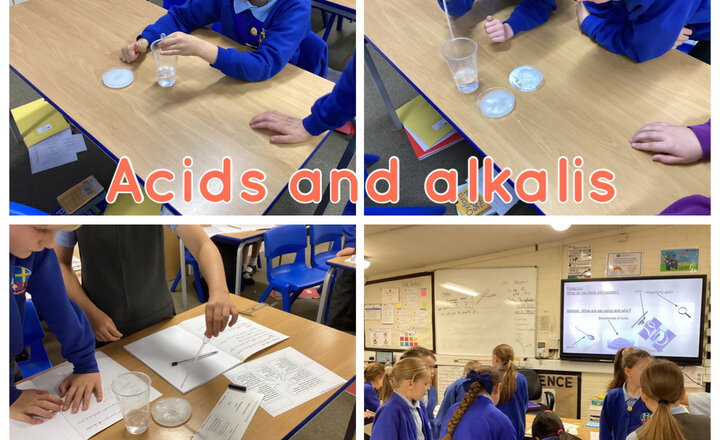
Year 5 - Science
In science, Year 5 explored the chemical reaction between bicarbonate of soda and vinegar. This is an example of an irreversible reaction between an acid and an alkali that produces carbon dioxide.
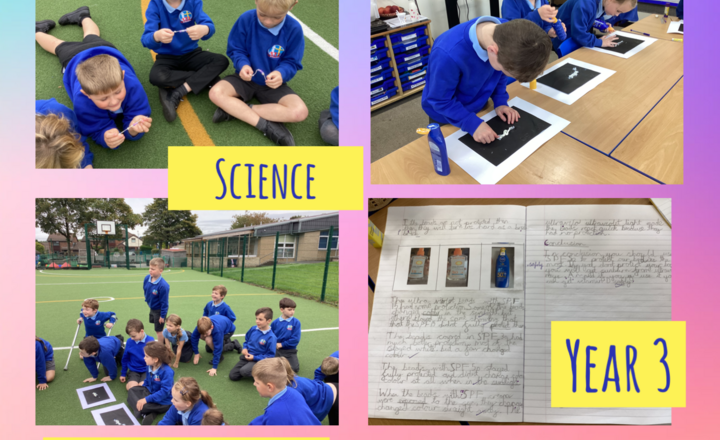
Year 3- Science- Learning About UV Light and Sun Protection
Today, the Year 3 students became scientists as they carried out an investigation exploring the light that comes from the sun and how to stay safe in it. They tested the effect of sunlight on ultraviolet beads using different sun creams: SPF 15, SPF 30, SPF 50, and no sun cream at all. Our buzzing scientists made predictions about what might happen to happen to the beads coated in sun cream and without. The investigation used ultraviolet (UV) beads, which are special beads that change colour when exposed to ultraviolet light. This makes them a great tool for demonstrating the effects of UV radiation, the type of light that can cause sunburn and skin damage. Sun cream contains chemicals that absorb or reflect UV radiation, preventing it from reaching the skin. The Sun Protection Factor (SPF) number indicates how well the sun cream protects against UVB rays, the primary cause of sunburn. A higher SPF means greater protection. They then carefully recorded their observations, and thought scientifically about the results. They finally wrote conclusions explaining why it is important to use sun cream with a high SPF value to protect our skin. The higher the SPF value of the sun cream, the more effectively it blocks UV radiation. This visual and hands-on demonstration reinforces the importance of using sun cream with a high SPF to protect our skin from the harmful effects of the sun. The experiment serves as a powerful reminder that UV rays are always present in sunlight and that protection is essential, even on cloudy days
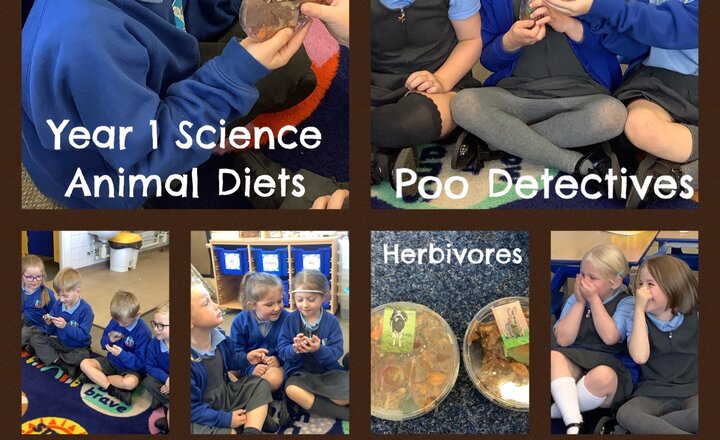
Year 1 Science: Animal Diets
Today we became scientific poo detectives. We examined the poo of a lion, cow, bear, rabbit and wolf to decide if they are omnivores, carnivores or herbivores. For carnivores, we were looking to see if there was meat in the poo. For herbivores, we were looking to see if there were leaves in the poo. For omnivores, we were looking to see if there were leaves and meat in the poo. Year 1 correctly identified the animal diets.
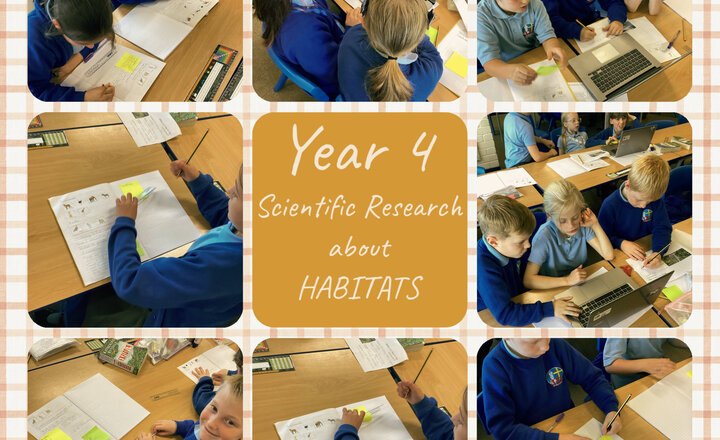
Year 4 - Science: Researching Habitats
This week our Year 4 scientists were working scientifically by conducting research to answer questions about habitats. Each group was given a habitat and asked to use the National Geographic site to answer the following four questions: Which animals live there? Which plants live there? What is the climate like? What are the conditions? The children then used their group research to present their findings in their books.
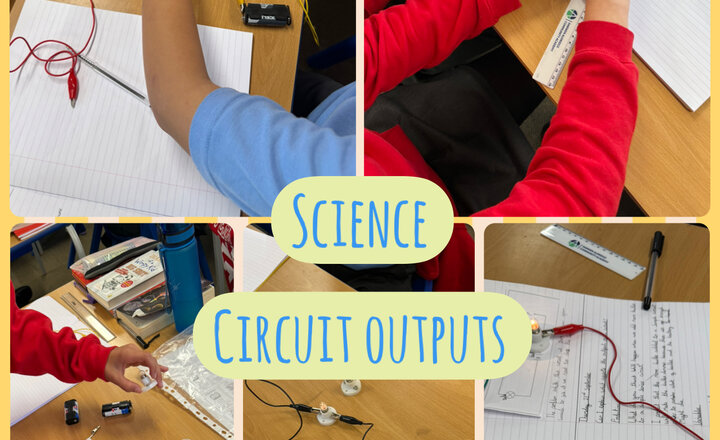
Year 6 - Investigating Circuit Outputs
This week in Science, Year 6 experimented with circuit building. The children investigated the effects that adding multiple bulbs has on a simple circuit, observing how the brightness of the bulbs changed as more components were introduced. They worked collaboratively to test their predictions, identify patterns and draw conclusions about how electricity is shared within a circuit.