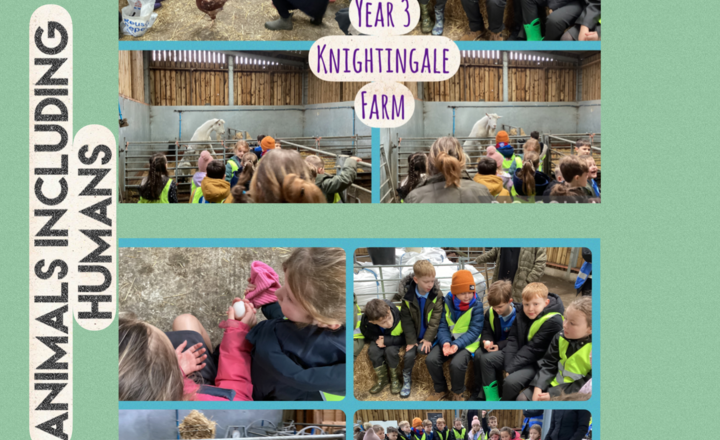
Year 3’s Adventure at Nightingale Farm
This morning, Year 3 had a fantastic visit to Nightingale Farm. The children saw chicks, Theo the goat, sheep, guinea pigs, and Ram the boy sheep. They even had the exciting opportunity to feel an egg that a chick had just laid! We learned how to care for farm animals and how to tell when chicks aren’t well, for example, if they are inactive, not eating, or if their comb is pale or shrivelled. The children were absolutely amazing throughout the visit. They were curious, kind, and respectful to all the animals, asking thoughtful questions and showing great care when feeding Theo and the pigs, who happily munched on the bread they were given. We also explored nutrition and the importance of looking after animals properly. This trip also helped us understand more about animals and humans, linking to what we are currently learning in science. Throughout the walk, Year 3 took time to appreciate God’s creation, noticing the beautiful colours of the trees, leaves, flowers, and surroundings, and they even paused to rest by the bus shelter, enjoying the fresh air and peaceful environment. As a special treat, Steph the farmer kindly gifted each child a little stationery pack, which made the day even more memorable! Along the way, the children received lots of encouragement from passersby, with horns honking and cheers of “Keep going!” Their energy, enthusiasm, and positive attitudes made the trip extra special. After visiting the farm, we continued our adventure at Blacksnape Park, exploring nature and enjoying life to its fullest. It was a truly wonderful day, full of learning, fun, and appreciation for the world around us.
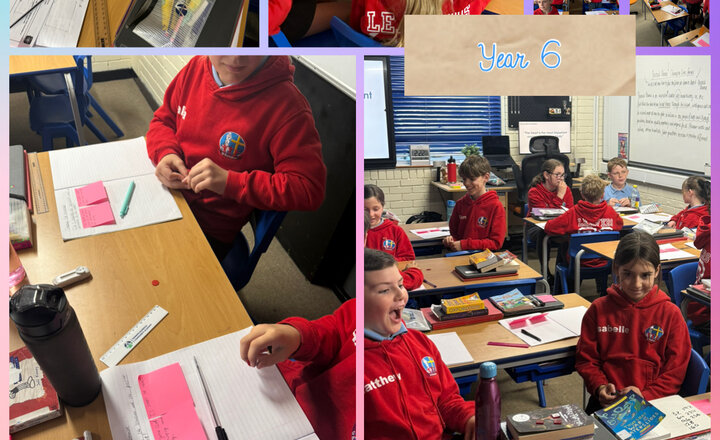
Year 6 - The Human Heart
Today, we began our new science unit on Animals Including Humans, focusing specifically on the human heart. The children used their talk tactics, particularly their talk tokens, to discuss and debate whether the heart is the most important organ in the human body. They thoroughly enjoyed sharing their ideas and demonstrated excellent oracy skills throughout the discussion. Following this, the children took part in an experiment to explore how the heart responds to exercise, recording their results carefully. Later in the lesson, they investigated the structure of the heart in more detail, labelling its different parts and learning about the functions.
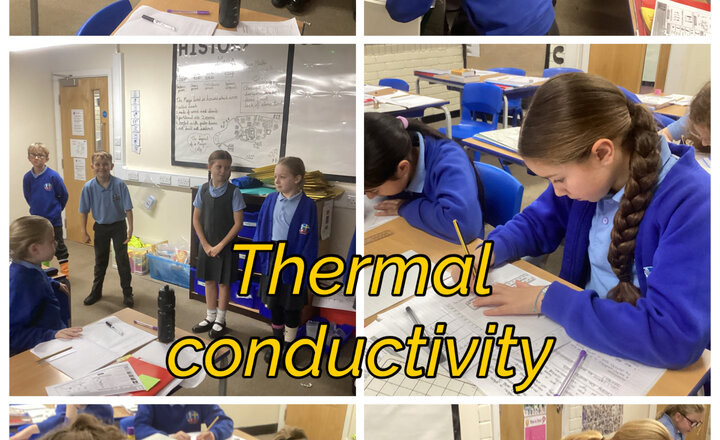
Year 5 - Science
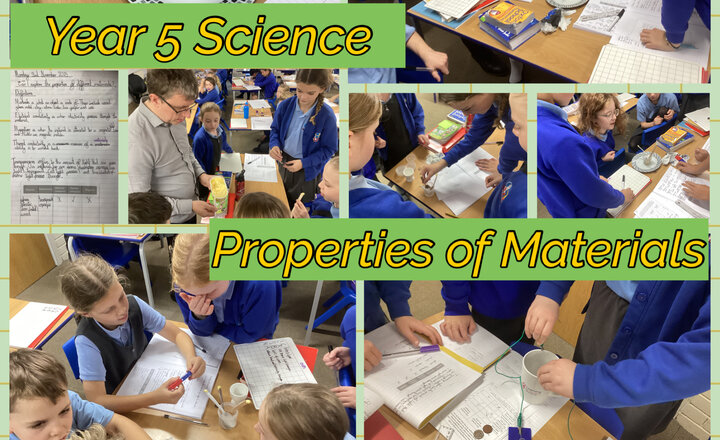
We continued our study of the properties of materials by carry out an experiment on thermal conductivity. We measured the temperature of containers of warm water over 30 minutes using thermometers. Each container was insulated using different materials: cotton wool, cling film and tin foil. We found that cling film created a layer of air around the container that acted to insulate the water and keep it warm. The tin foil conducted the heat away quickly.
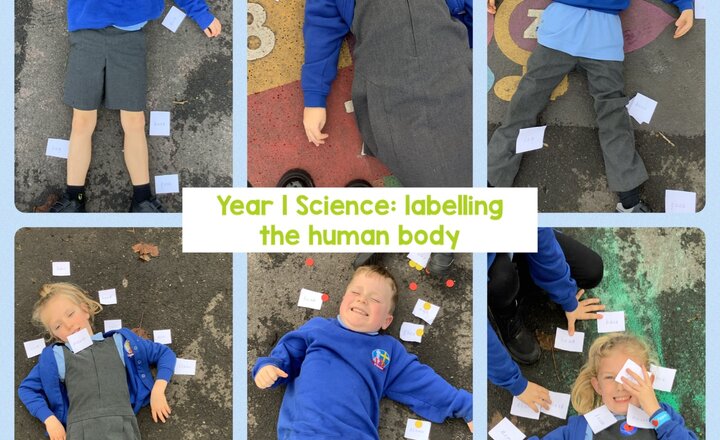
Year 1 Science: labelling the human body
Year 1 worked wonderfully in pairs today to label each other’s body parts. They labelled the head, arm, elbow, knee, leg, mouth, eye, teeth, face and hair. Their partners had to stay very still whilst the children read the labels. It was lovely to see them working together so nicely.
Year 5 - Science
Our new topic in science is properties of materials. We started by defining what the terms transparency, magnetism, thermal and electrical conductivity meant before carrying out a range of experiments to determine the properties of fabric, glass, iron, copper, clay, wood and plastic. The children worked like real scientists, collaborating together and debating their observations and conclusions.
Year 5 - Science
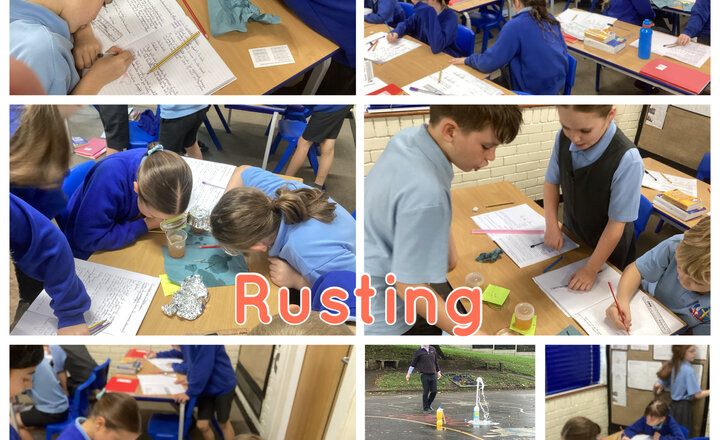
We completed our experiment on the chemical reaction of rusting, drawing scientific diagrams of nails in tap and saltwater. We found that coating iron with paint or Vaseline delays rusting. We discussed the best way of stopping an iron bridge from rusting before finishing the topic with an example of a physical reaction - mentos in Fanta and lemonade!
Year 3- Science- Shadow Puppet Show
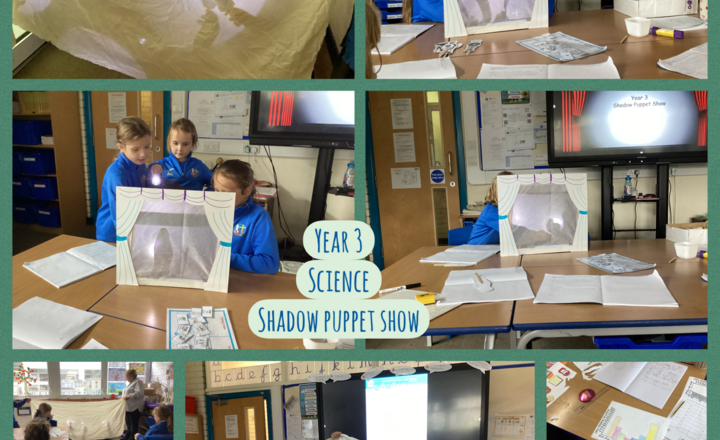
Today, the children became both scientists and artists as they explored the fascinating world of shadows. They created bar charts to accurately record and show exactly how the sun's position causes shadows to move and change size throughout the day. Following this scientific exploration, they took that understanding and applied it to performance, designing and staging an amazing shadow puppet show, putting the knowledge they've gained this half term in science, all about light sources, light rays, and how light travels, directly into practice.
Year 4 - Science: Animal Adaptations
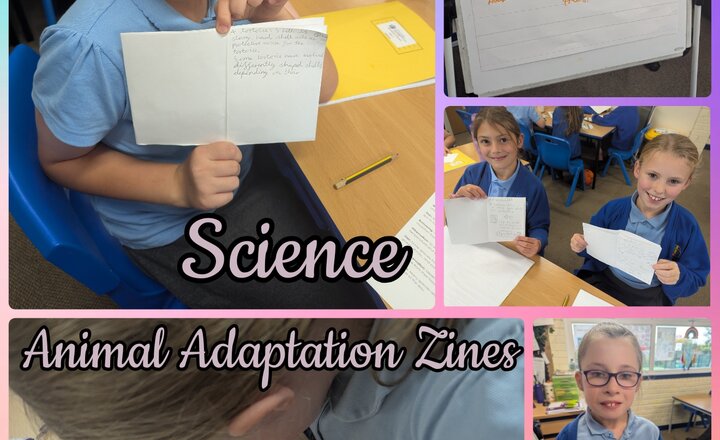
Year 4 worked investigatively this week in science to find out how a chosen animal is adapted to its habitat. The children chose Polar bear, flamingo or tortoise and created a zine to record the adaptations and how they are useful for survival.
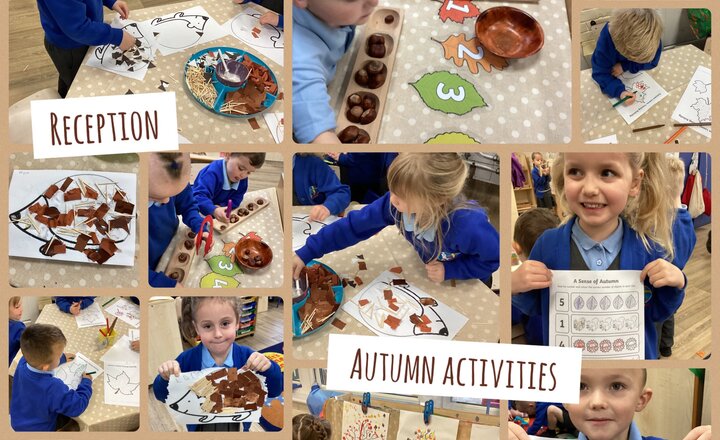
Reception Autumn Activities
This week has been all things Autumn in Reception! We have been looking at seasonal change and how the environment around us is starting to look and feel different. We created hedgehog collages, counted Autumn treasures, finger painted Autumn leaves and used Autumnal colours to create patterns on leaves.
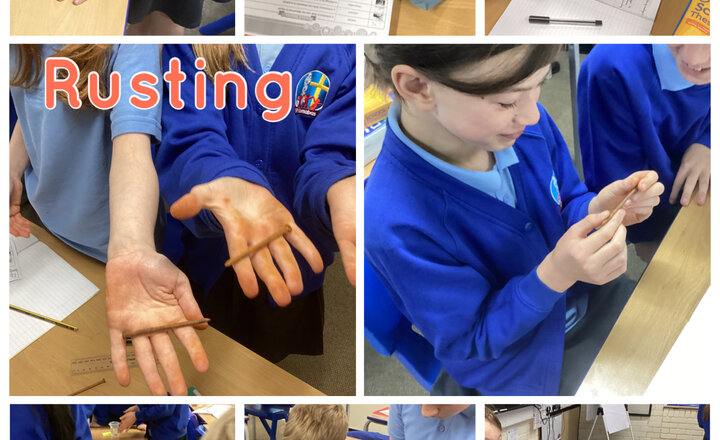
Year 5 - Science: Rusting
Year 5 continued learning about chemical reactions by exploring rusting: the reaction between iron, water and oxygen to produce a new substance. The children defined rusting and corrosion before starting an experiment to see how the reaction can be sped up using saltwater or slowed down using painted iron.
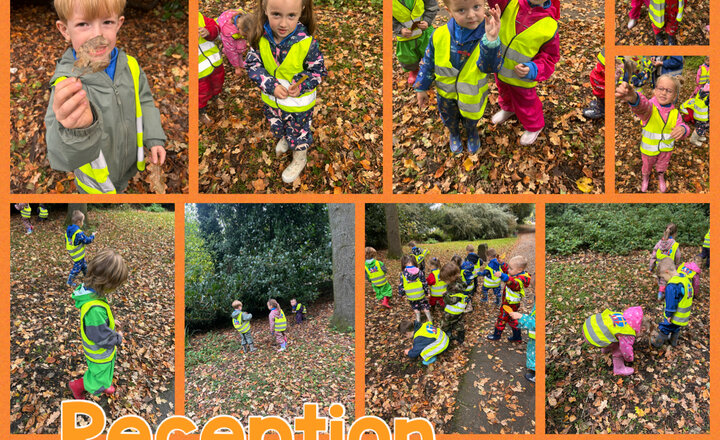
Reception: Muddy Monday
For our Monday Monday this week the children in Reception have been finding Autumn treasures. They loved finding and exploring why the leaves have changed colour and saw a variety of different Autumnal leaves. The children also learnt what deciduous and evergreen trees were. We also found conkers and acorns. Mrs Wilkinson and Mrs Thompson were really impressed with the children's walking as they walked all the way to Whitehall Park. Well done!
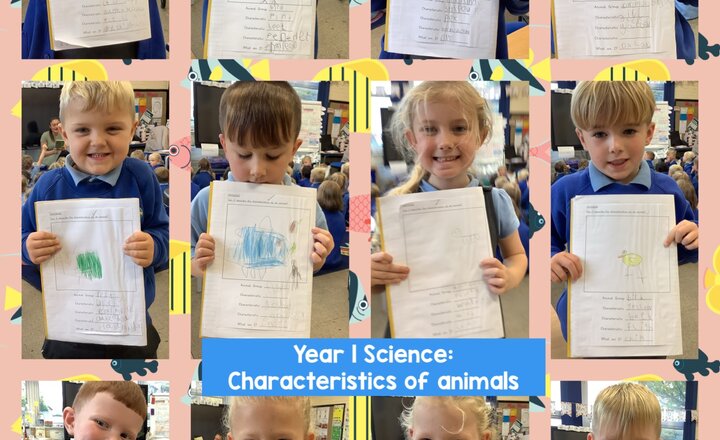
Year 1 Science: Characteristics of animals
In Science, we have learnt lots of information about animals over the past 6 weeks. We have learnt all the animal groups: mammals, reptiles, amphibians, birds and fish. Additionally, we have learnt how to group them based on their diets: carnivores, omnivores and herbivores. Today the children had to draw an animal of their choice into their books and had to write 3 characteristics to describe the animal as well as the animal group it belongs too. For example, a giraffe is a mammal, it is yellow, spotty and has four legs. The children then tried to guess each other’s animal based on the clues, which was a lot of fun!