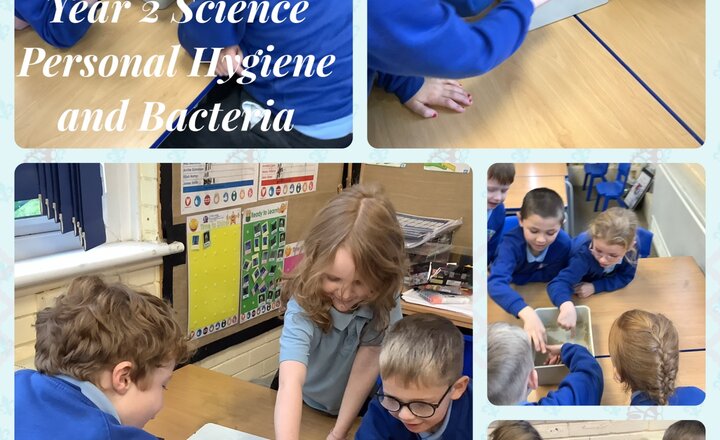
Year 2 - Science - Personal Hygiene and Bacteria
Today for Science we have had an experiment to see how washing our hands can help to stop the spread of germs. We used pepper to represent germs and sprinkled some into a bowl of water, then, the class used dish soap on their fingers to repel the “germs”.
.png)
Year 3- Science - Functions of a muscle
Today in Science, Year 3 matched animals to their skeletons and investigated the structure and function of muscles, including their classification, location, and role in movement. As part of their learning, they created a model arm using cards and elastic to demonstrate how muscles work. By using cards for the bones and elastic bands to represent the tendons, the children were able to visualise how muscles pull on bones to create movement.
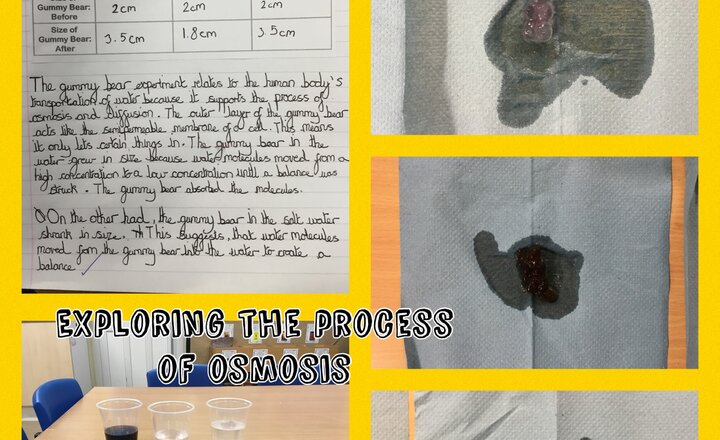
Year 6 - Exploring osmosis and diffusion
Today, Year 6 explored how our bodies get the water and nutrients they need through the process of osmosis and diffusion. To highlight these processes, we soaked gummy bears in 3 different liquids (Coca Cola, water and salty water) for 24 hours. We discovered that the gummy bear in the water grew in size because the water molecules moved from a higher concentration (water), to a lower concentration (gummy bear) which is exactly what happens in our bodies. The water in our blood would move into our cells in order to keep us hydrated. However, the gummy bear in the salt shrank. This tells us that if there is too much salt in our blood stream, the water will actually move away from our cells, where it is needed, and back into the blood to restore balance. As a result, we can become dehydrated and our cells become less efficient.
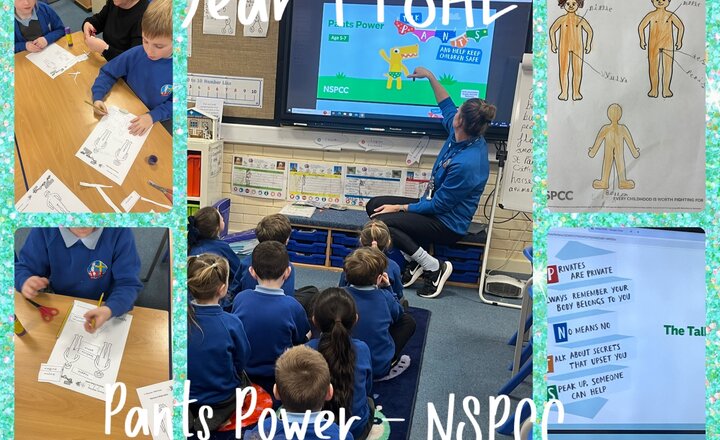
Year 1 - PSHE Pants Project
Today in PSHE we learned all about Pants Power and staying safe. We discussed who safe adults are that we can talk to both in school and at home. We then labelled parts of our bodies with the anatomically accurate labels. The children worked extremely hard to label their bodies and also remembered The Talk Pants Rules!
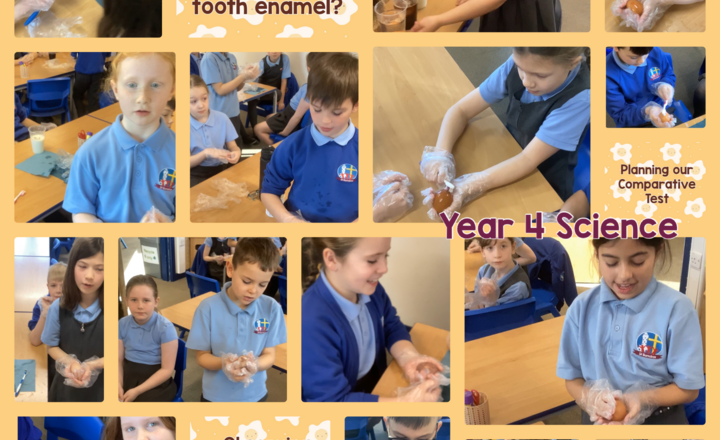
Year 4 - Science: Planning a Comparative Test
This week, our Year 4 super scientists learned how to plan a comparative test. They were interested to find out the effects of different liquids on our teeth. We used eggs to represent tooth enamel and we had 6 different liquids to test: water, milk, vinegar, coffee, cola and cordial. An egg was placed into a cup of each liquid and left for two days. After two days, the children removed the eggs from the liquids and examined them, discussing with their partners any observations which they noticed. They then brushed the eggs for two minutes with toothbrushes, and then they made their final observations. Next week, we will discuss the results and debate which liquid they think would cause the most damage to our teeth.
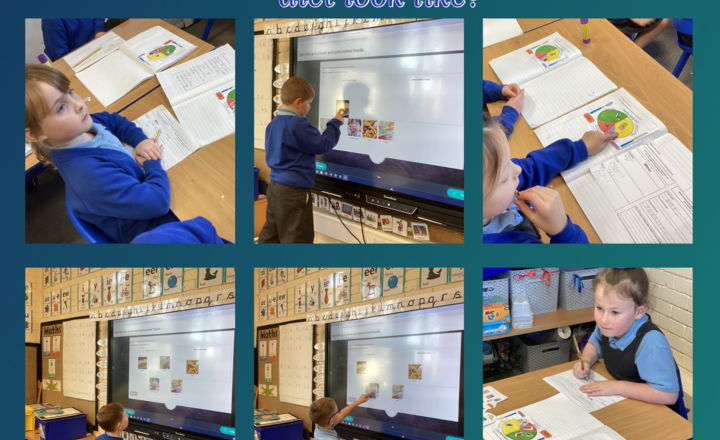
Year 2- Science- What does a healthy balanced diet look like?
This afternoon, Year 2 scientists recapped the five food groups and expanded their knowledge of different food types. We explored the advantages of fresh foods and discussed the advantages and disadvantages of pre-cooked and processed foods. Some children participated by using the interactive board to categorise food items. We had a great discussion about processed foods like canned fish and popular choices like McDonald's and pizza. For their mission assignment, the children created healthy meal plans for breakfast, lunch, and dinner.
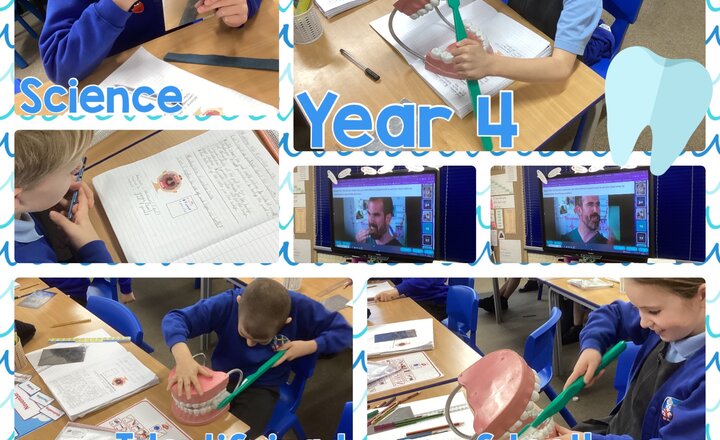
Year 4 - Science: Teeth
Our current science topic has definitely got the Year 4s buzzing. This week we explored our own teeth using mirrors, counted them with our tongues, learned about the different types of teeth and then recorded our findings on a diagram using a key. We watched a video of an investigation, which demonstrated what would happen if we had a mouth full of just one type of tooth and we wrote about the functions of each tooth type. There was even enough time to recap tooth brushing habits: two times a day for two minutes, tickling every tooth!
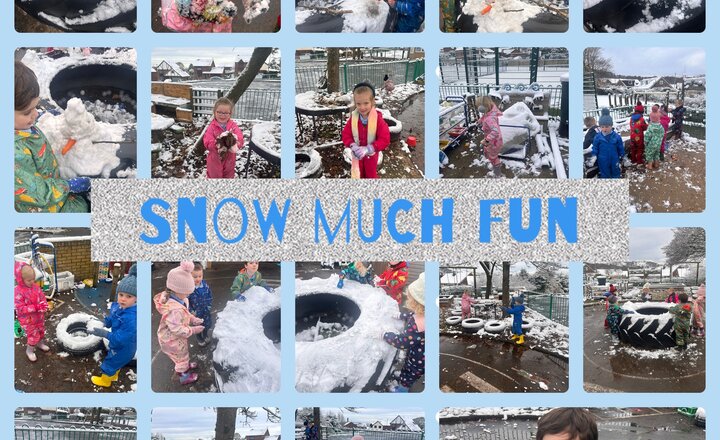
Reception: Exploring the Snow
Our Reception children enjoyed exploring the snow today. They worked together in small groups to build snowmen! They collected resources for the arms and they all had carrots for their noses. The children also found some icicles so we looked closely at them and how they had formed. It was also wonderful to look around at the winter sight and really feel the snow too. Our world is beautiful in all types of weather and what a treat we all had this morning.
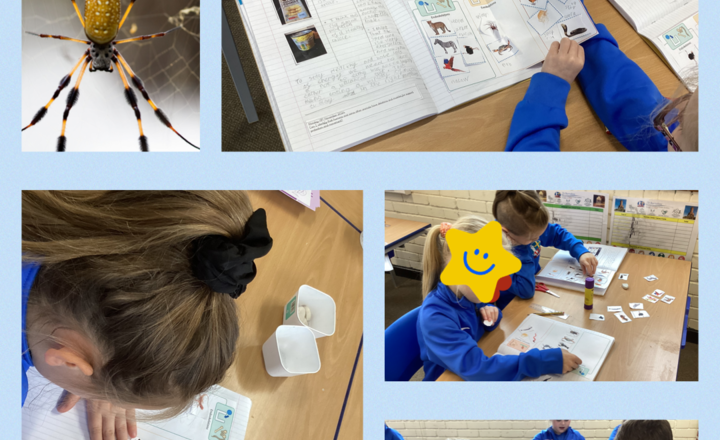
Year 3 - Science- Identifying which animals have an endoskeleton, exoskeleton and a hydrostatic skeleton.
Today, Year 3 scientists explored the different types of skeletons: endoskeletons, exoskeletons, and hydrostatic skeletons. Using presentation slides, they researched animals to discover which kind of skeleton they have. They also learned that while these skeletons are very different in structure and function, they all provide support and protection for the animal's body. Each type of skeleton has its advantages and disadvantages, depending on the animal's environment and lifestyle.
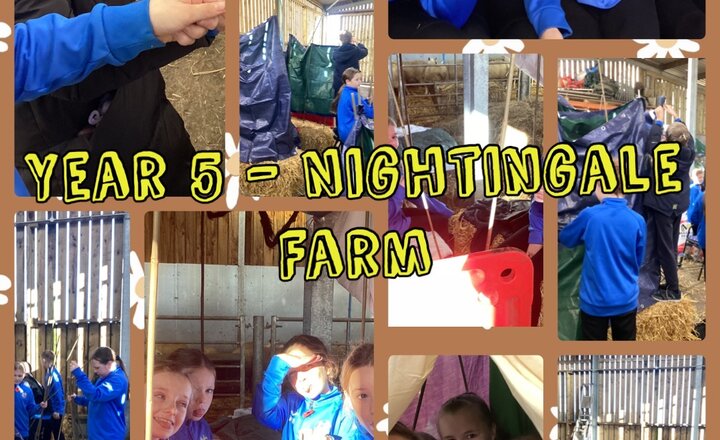
Year 5 - Nightingale Farm
Year 5 had an exciting and educational day at Nightingale Farm! The children tackled a den-building challenge, carefully selecting materials and assessing their strength to withstand the outdoors. They evaluated thermal properties to keep the inside warm, making valuable science connections. They also visited and learned about the friendly farm animals—goats, pigs, and chickens—observing their habits and needs. To top it all off, everyone gathered around a fire to toast marshmallows and enjoyed experiencing life on a farm.
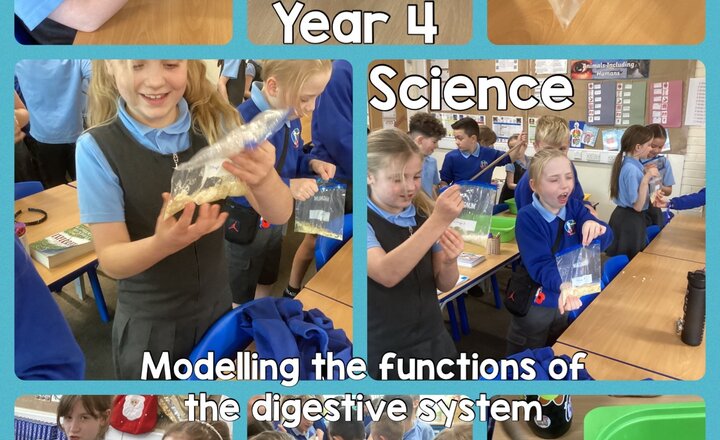
Year 4 - Science: Modelling the Digestive System
I’m sure that many of us found this lesson hard to stomach, but it was all in the name of science! The children have been learning about the parts of the digestive system and, this week they created a model digestive system in order to understand the functions of each organ and report on their findings. They acted out the process of digesting a cracker using a bowl and a knife and fork to chop the cracker into small pieces. They then transferred this to the oesophagus, which passed it down to the stomach (a ziplock bag containing water and washing up liquid. Here, the cracker pieces were churned up into a paste, which was then added to the small intestine (one leg from a pair of tights). The children even acted out peristalsis to squeeze the “nutrients” from the paste and push it down through the large intestine before the left over waste was pushed out through the anus (a small hole in the end of the tights. It was a messy but memorable activity, which produced some super explanations!
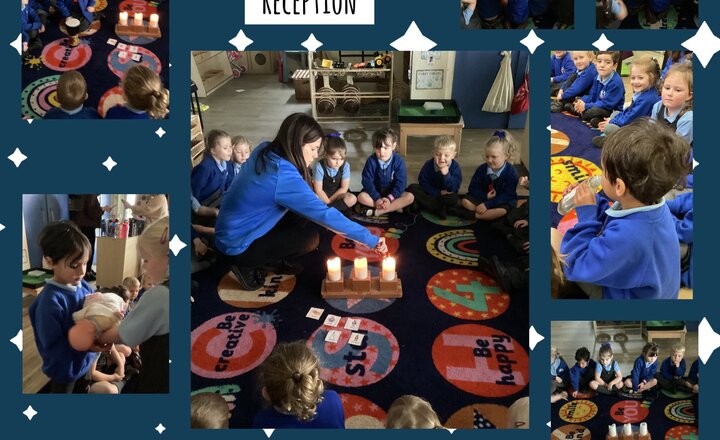
Reception RE: The Birth Of Jesus
Today our Reception children began their Christmas unit in RE. We took part in a sensory story all about the birth of Jesus. We used Widget symbols for each part and used our senses to get involved with the story. The children smelt baby oil to understand that Mary was expecting a baby, we walked to show how Mary and Joseph travelled to Bethlehem and we lit candles to show how dark it was. The children then used a drum to knock on the door to see if there was any room. We then used the sign for no. Finally, the children wrapped a baby in blankets to show the birth of Jesus. The children really enjoyed drawing parts of the story in our scrap book and enjoyed getting involved in the story all about the birth of Jesus. We can't wait for the children to act out this special story in their Nativity production in a few weeks time.