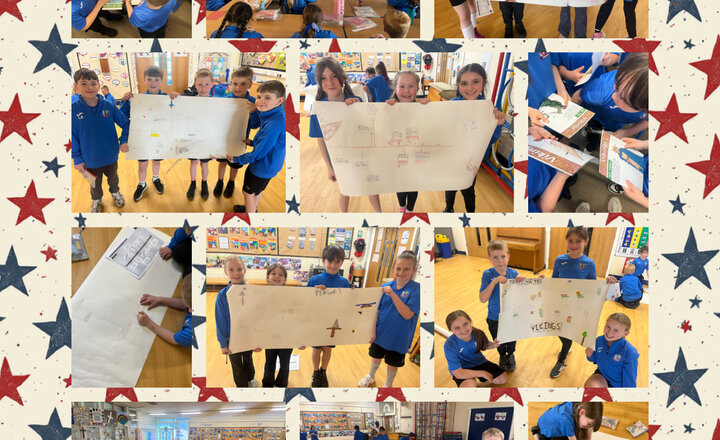
Year 4 History
Today we started our new History unit on why the Vikings invaded Britain. We started by looking at our previous history units: Roman Britain and Anglo-Saxon Britain. Next we placed key events on a timeline starting with when the Romans invaded back in BC 55, all the way through to the Vikings arriving at Lindisfarne in AD 793. The children focused in on the Viking timeline, creating their own in groups, adding key dates and events up until when Edward the Confessor (Anglo-Saxon) became King of England in AD 1042.
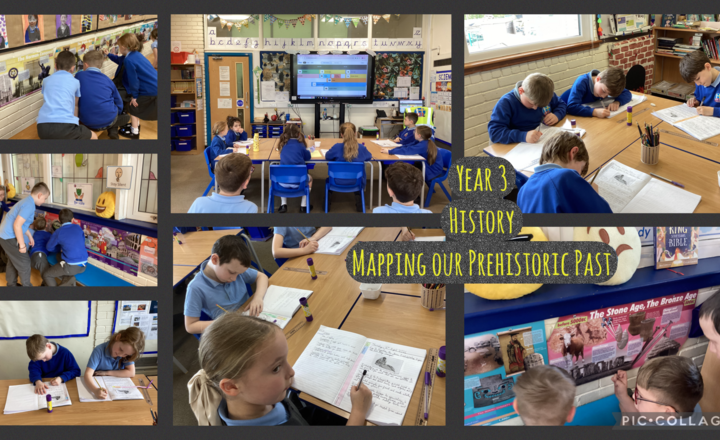
Year 3- History- Mapping Our Prehistoric Past
In history class today, the Year 3 Historians took their learning beyond the classroom and became true historians as they explored the Prehistoric Ages. We started by investigating the massive timeline in our school hall, which shows how humans have lived in Britain for over 900,000 years. To deepen our understanding, we then used an interactive timeline. We discovered how the Stone Age lasted for a vast amount of time as humans mastered flint tools and early farming, followed by the Bronze Age, where the discovery of metal-working changed how people traded and lived. Finally, we saw the rise of the Iron Age, characterised by powerful hillforts and advanced tools.
.jpeg)
Heroes of Troy
We are so proud of our drama club for their fantastic production of ‘Heroes of Troy’. We loved seeing you all shine on stage and it was amazing to see how much your confidence has grown over the last ten weeks. A huge thank you to Miss Woods and Mr Mealor for their support and direction. Also a massive thank you to all of the parents and carers who came to support. All of the photos are available here and the recording will be shared soon. https://www.stbarnabasdarwen.co.uk/photo-galleries/heroes-of-troy-drama-club-production
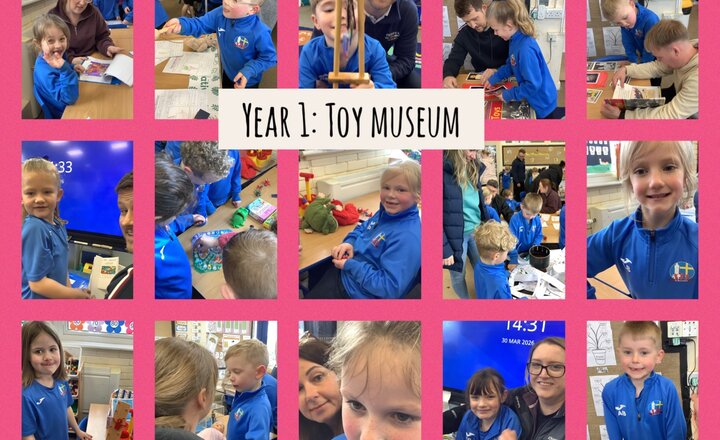
Year 1: Toy Museum
Year 1 loved showing their adults all of their learning in our toy museum. They played with old and modern toys together and taught their parents lots of new facts.
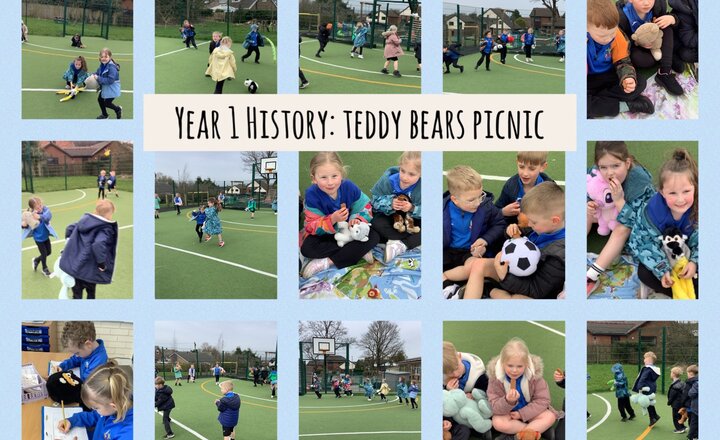
Year 1 History: Teddy Bears Picnic
Year 1 brought their favourite teddy bears from home to join our teddy bears picnic today. We went around in a circle and shared our teddies names and why we love them. Then, we played some fun games with our teddy bears such as teddy bear musical statues, ‘What Time Is It Mr Bear?’ and we even had a teddy bear parade, before enjoying a yummy biscuit. Once we were back in the classroom, we looked at how teddy bears have developed over time, starting with 1920’s as this is over a hundred years ago. We then compared our modern day teddies to teddies of the past, identifying a similarity and difference between them.
.jpeg)
Year 4 History- Converting Anglo-Saxons to Christians
Today we looked at various Missionaries who came to England to convert the Anglo Saxons to Christianity. The children worked in groups, to identify why they came to Britain, where they came from and how they managed to convert the Anglo Saxons from paganism to Christianity.
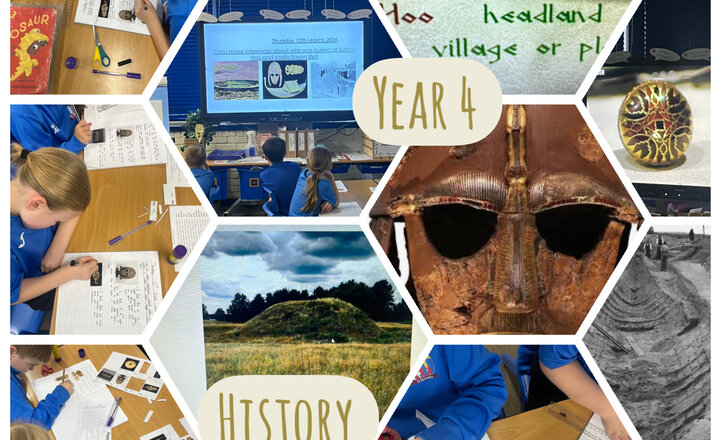
Year 4 History - The Burial at Sutton Hoo
In our History lesson this week we were looking at Anglo Saxon artefacts and the burial ground at Sutton Hoo. The children were presented with eight artefacts and they had to use inference skills to develop their ideas of what they thought they were, what they were made from and how they may have been used.
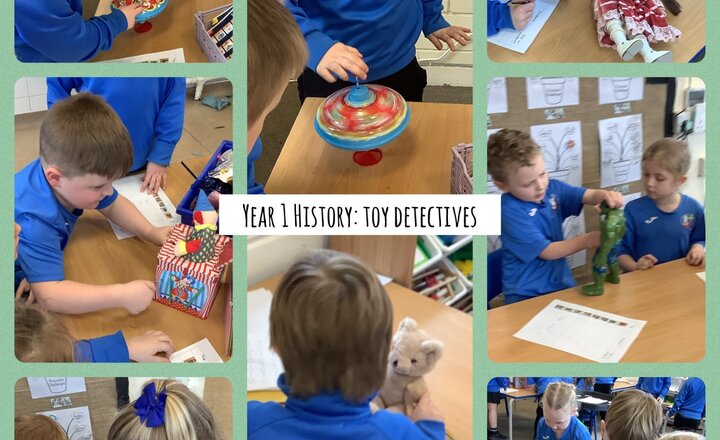
Year 1 History: Toy Detectives
Year 1 became toy detectives in History today. The examined a range of toys and used clues such as the material and quality to help decide if it was old or modern. They compared similarities and differences of old and modern toys and loved playing with the toys too.
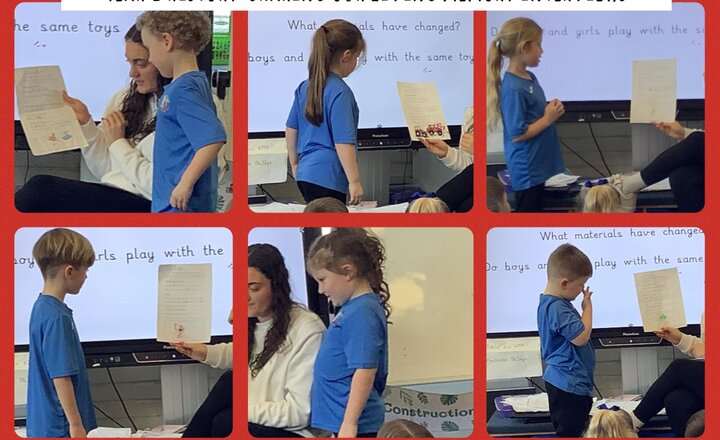
Year 1 History: Sharing Our Living Memory Interviews
At home, Year 1 have been interviewing their family members about toys they had when they were little. Together, we shared our interviews to discover toys that we have never seen or played with, as well as some toys which we still play with today. We noticed that our parent’s favourite toys were made from plastic, but any grandparent’s favourite toys were typically metal, wood or fabric. This helped us to understand more about toys from the past and the materials they were made from.
.jpeg)
Year 6 - 1911 Census Boycott
Today in History, Year 6 focused on the reasons why many women in 1911 refused to fill in the national census. The children learned that some women, particularly Suffragettes and Suffragists, believed it was unfair to be counted in a country where they were not allowed to vote. They explored the powerful idea behind the protest slogan: “If women don’t count, neither shall they be counted.” The class discussed the wider fight for women’s rights at the time, including the campaign for equal voting rights and considered why refusing to complete the census was seen as a peaceful but powerful act of protest. The children examined how women may have felt in 1911 — frustrated, determined, brave and hopeful for change. To deepen their understanding, the children created their own 1911 census entries, adding impactful and persuasive slogans to reflect the strength of feeling among campaigners. This helped them to empathise with the challenges women faced and to appreciate the courage it took to stand up for equality.
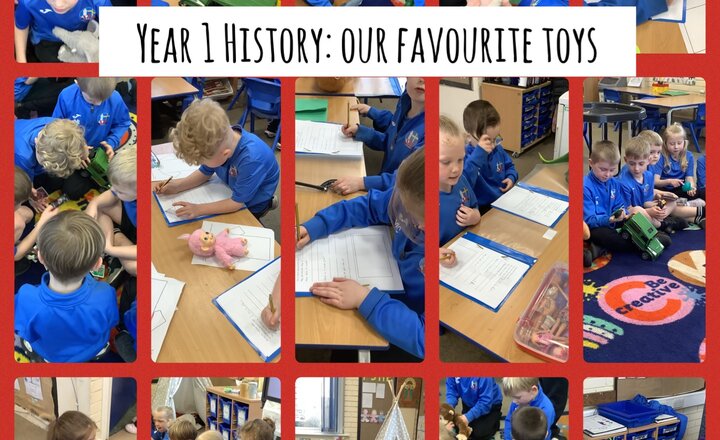
Year 1 History: Our Favourite Toys
Today, we started our new topic in History: toys from the past. We started by bringing in our favourite toys from home and comparing these to pictures of old toys such as a ball and cup and wooden rocking horse. We noticed that our toys are mainly plastic and fabric materials. Then, we wrote about our favourite toys and shared them with each other to play together.
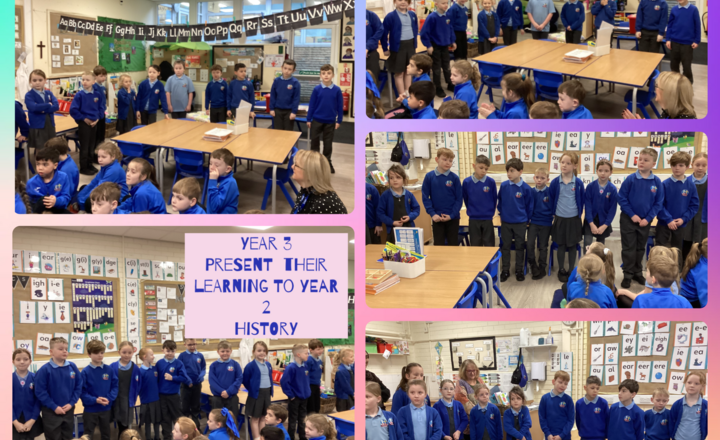
Year 3 Present Their Learning: A Journey Through Victorian History to Year 2
Today, Year 3 had a fantastic opportunity to showcase their historical expertise by presenting their learning to Year 2. The children transported their audience back in time, sharing insightful details about the harsh realities of the Victorian era and the reformers who fought for change. The children shared fascinating facts about: The Factory Acts: They explained how these new laws finally made it illegal to employ children under the age of nine and limited the gruelling hours older children could work. Lord Shaftesbury: The class spoke about his tireless work as a reformer who believed every child deserved a childhood and an education. Ragged Schools: They described these free schools that provided food, clothing, and lessons to the most vulnerable children who couldn't afford a traditional education. Working Conditions: The children painted a vivid picture of the dangerous health conditions in Victorian factories, from the lack of ventilation to the "scavenging" roles children often performed under moving machinery. Whether presenting individually or in small groups, every child rose to the challenge, providing a brilliant boost for our Voice 21 initiative. It was a joy to watch them grow into confident speakers, using their oracy skills to teach others about the differences between the past and the present. Well done, Year 3.