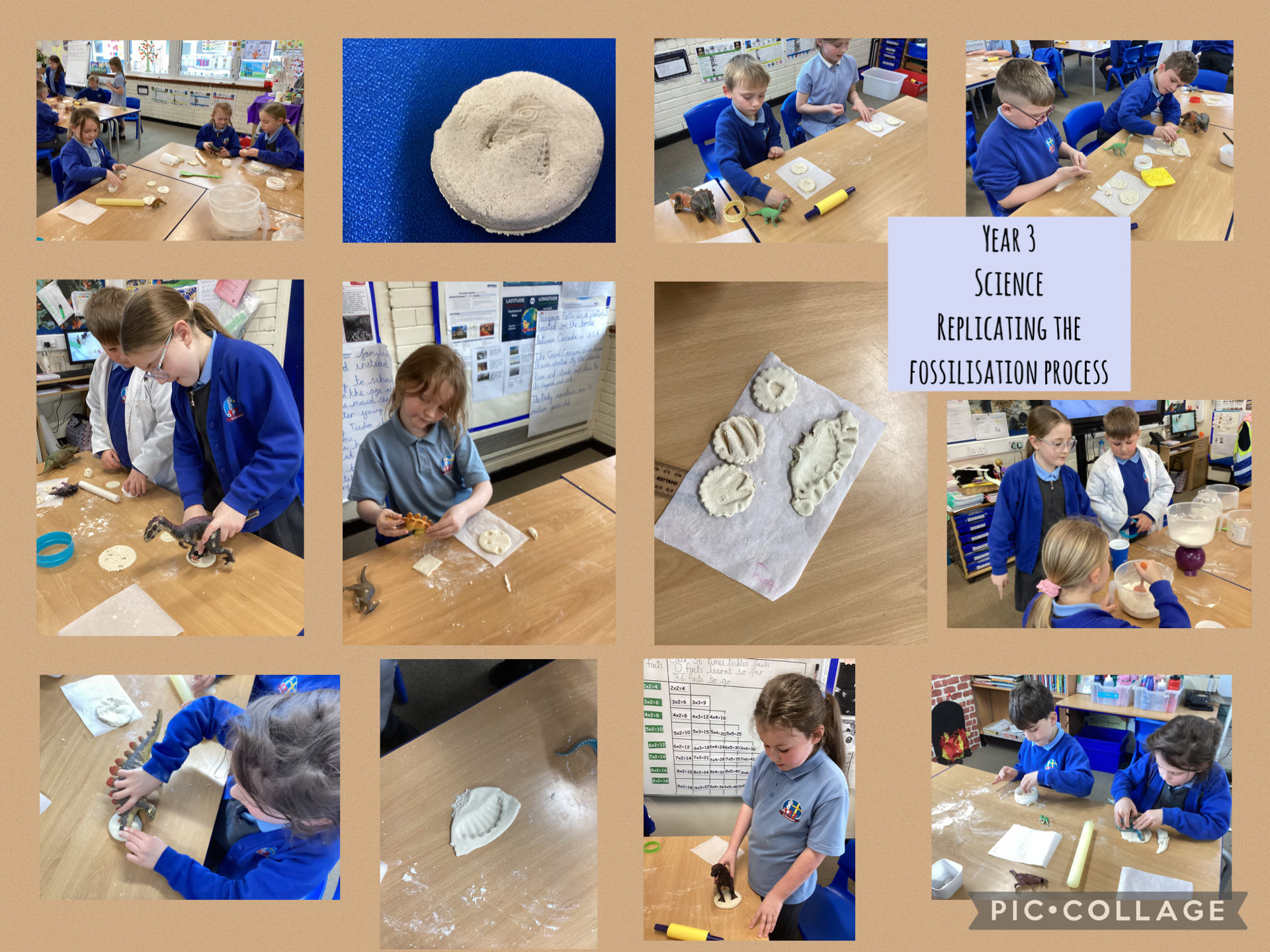
In Science today, we explored the fascinating process of how fossils are formed, which begins when an organism dies and is quickly buried by sediment, such as sand or mud carried by wind or water. This is essential because it protects the remains from decaying or being destroyed before they can be preserved. Over a very long period, layers of this sediment turn into solid rock, preserving the imprint of the living thing. These fossils are eventually discovered through natural erosion, such as wind wearing away a cliff face, or by palaeontologists searching in sedimentary rock formations. To understand this scientific process, we became "experts" by creating our own trace fossils. We started by mixing 200g of salt, 150g of flour, and 100ml of cold coffee to create a "sediment" dough. After kneading the mixture until it was no longer sticky, we used some toy dinosaurs from the Reception class to create our imprints. By pressing the dinosaurs into the dough and gently peeling them off, we replicated how living things leave behind an embedded shape that eventually dries and hardens into a fossil. By studying these remains, scientists can unlock secrets about the anatomy, behaviour, and extinction of ancient creatures, providing a vital record of the history of life on Earth.



.png)